Story Highlights
- Supreme Court ruled 6-3 that Trump can fire independent agency officials without cause, backing his removal of FTC Commissioner Rebecca Slaughter
- The decision overturns Humphrey’s Executor, a 1935 precedent that protected independent agency leaders from political removal
- Justice Sonia Sotomayor wrote a sharp dissent warning the ruling would create “chaos” in regulatory governance
What Happened
The Supreme Court’s decision Monday centered on President Trump’s dismissal earlier in his second term of Rebecca Slaughter, a Democratic member of the Federal Trade Commission. Slaughter argued her removal violated long-standing federal law that shields commissioners at independent agencies from being fired for political reasons. In a 6-3 vote split along ideological lines, the conservative majority sided with Trump, ruling that the president holds broad constitutional authority to remove officials who exercise executive power, regardless of whether Congress sought to insulate them.
The ruling effectively overturns Humphrey’s Executor v. United States, a 1935 decision that had long served as the legal foundation protecting commissioners at agencies such as the FTC, the Securities and Exchange Commission, and the National Labor Relations Board from removal without cause. For nine decades, that precedent allowed independent agencies to operate with a degree of insulation from direct presidential control, on the theory that bodies enforcing trade, securities, and labor law needed continuity and independence from short-term political pressure.
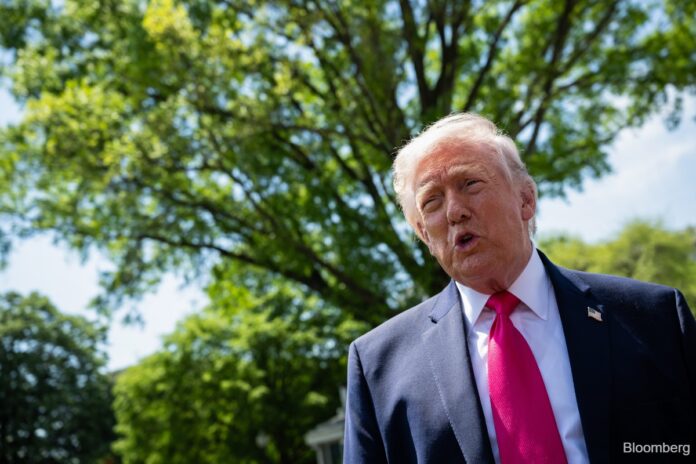
Writing for the majority, the court concluded that the original 1935 ruling rested on an outdated understanding of executive power and that the Constitution vests removal authority squarely with the president. Trump celebrated the decision on social media, calling it a historic affirmation of presidential authority that arrived “at a time when it is most needed.”
Justice Sonia Sotomayor authored a forceful dissent, joined by the court’s other liberal justices, accusing the majority of replacing decades of stable legal practice with what she called a “half-baked theory of executive power.” She warned the decision leaves agency authority simultaneously sweeping and undefined, predicting confusion for regulators, businesses, and courts attempting to apply the new standard. Senator Elizabeth Warren also condemned the ruling, arguing it allows Trump to seize control of agencies meant to serve the public rather than political interests.
The decision was one of several major rulings the Supreme Court issued as it closed out its term before its summer recess. It marked a 3-1 split for the administration that day, with Trump prevailing on the removal-power question while losing on three other fronts, underscoring a Supreme Court term that delivered the administration both significant wins and setbacks.
Why It Matters
This ruling fundamentally alters the balance of power between the presidency and the independent regulatory state that has existed since the New Deal era. For nearly a century, agencies like the FTC and SEC were designed to operate with insulation from political winds, allowing commissioners to make decisions based on technical and legal judgment rather than presidential preference. That insulation is now significantly weakened, giving any sitting president, not just Trump, far greater latitude to reshape these bodies through personnel changes alone.
For businesses and industries regulated by these agencies, the implications are substantial. Companies navigating antitrust enforcement, securities regulation, or labor disputes may now see policy shift more abruptly with changes in the White House, since commissioners who disagree with a president’s regulatory agenda can be removed at will. This introduces a new layer of unpredictability into long-term business planning and compliance strategy.
The ruling also has implications well beyond Trump’s presidency. Future presidents, regardless of party, will inherit this same expanded removal power, meaning a future Democratic administration could similarly reshape the FTC, SEC, NLRB, or other independent bodies according to its own priorities. Legal scholars note that this could accelerate a pattern of regulatory whiplash, where agency policy swings dramatically with each change in administration rather than maintaining continuity rooted in expertise.
Civil liberties and good-government advocates argue the decision undermines the checks-and-balances framework Congress built specifically to prevent the executive branch from politicizing technical regulatory functions. Critics contend that without independent oversight, agencies risk becoming extensions of presidential will rather than neutral enforcers of the law, a concern amplified by Trump’s broader pattern of consolidating control over traditionally independent institutions during his second term.
Economic and Global Context
The ruling arrives amid a broader pattern of Trump-era efforts to consolidate executive control over financial and economic policymaking. It follows a separate, related legal fight over Trump’s attempt to remove Federal Reserve Governor Lisa Cook, which the Supreme Court ultimately blocked, preserving the Fed’s independence specifically as a carve-out from the broader removal-power ruling. That distinction signals the court views monetary policy as uniquely sensitive to political interference, even as it loosened restrictions on other regulatory bodies.
Market analysts have noted that regulatory predictability is a key factor in business investment decisions, and any signal of agency instability could affect sectors closely tied to FTC oversight, including technology, retail mergers, and consumer protection enforcement. Industries currently navigating antitrust scrutiny, including major technology firms facing ongoing FTC actions, will be watching closely to see how commission composition and enforcement priorities shift under expanded presidential control.
Internationally, the ruling could affect how foreign governments and multinational companies view the durability of U.S. regulatory commitments, particularly in trade-adjacent enforcement areas where FTC and SEC actions intersect with global business operations. Allies and trading partners often rely on consistency in U.S. regulatory bodies when negotiating commercial agreements, and increased politicization could introduce additional uncertainty into those relationships.
The timing also coincides with a period of significant economic policy turbulence, as the administration continues to navigate tariff disputes, Federal Reserve tensions over interest rates, and ongoing trade negotiations. Expanded presidential control over regulatory agencies adds another lever Trump could use to align economic policy across multiple fronts simultaneously.
Implications
In the near term, Trump is expected to continue reshaping the composition of independent agencies, potentially removing additional Democratic-appointed commissioners at the SEC, NLRB, and other bodies to align them more closely with his administration’s priorities. This could accelerate enforcement changes in antitrust, labor, and securities policy well before the 2026 midterm elections.
For Congress, the ruling raises questions about whether lawmakers will attempt to legislate new protections for agency independence, though any such effort would likely face a difficult path given the current makeup of the federal courts and the constitutional reasoning underlying Monday’s decision. Some Democratic lawmakers have already signaled they may explore legislative responses, though success is far from guaranteed.
For businesses, legal and compliance teams will need to factor in greater regulatory volatility going forward, particularly around presidential transitions. Companies operating in heavily regulated industries may increasingly diversify their compliance strategies to account for the possibility of significant policy shifts tied directly to changes in the White House rather than gradual regulatory evolution.
Looking ahead, this decision will likely be cited as a cornerstone precedent in future litigation over executive authority, shaping how courts evaluate presidential power over the federal bureaucracy for years to come, regardless of which party controls the presidency.
Sources
US Supreme Court hands Trump 3-1 defeat in key rulings: What we know

