Story Highlights
- Supreme Court ruled 6-3 that state bans on transgender athletes in girls’ and women’s sports do not violate the Constitution’s equal protection guarantee
- The case combined challenges from transgender students Becky Pepper-Jackson of West Virginia and Lindsay Hecox of Idaho
- Roughly 27 states have enacted similar laws restricting transgender athletes from competing on teams matching their gender identity
What Happened
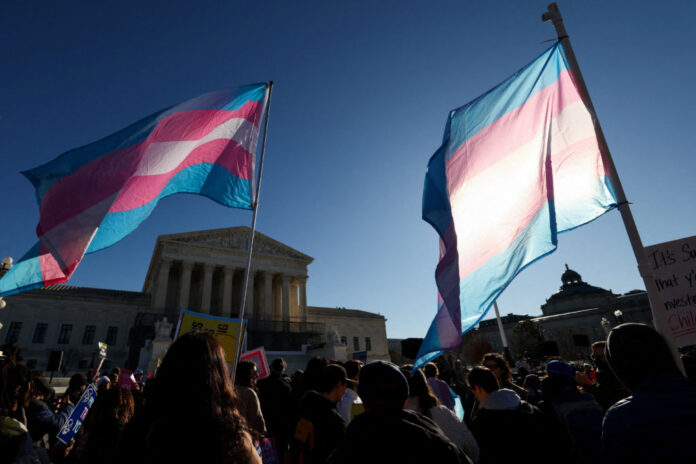
The Supreme Court issued its ruling Tuesday in two consolidated cases, West Virginia v. B.P.J. and Little v. Hecox, addressing whether state laws barring transgender athletes from girls’ and women’s school sports violate the Constitution’s equal protection clause. In a 6-3 decision along ideological lines, the court sided with the states, upholding laws in West Virginia and Idaho that restrict participation based on sex assigned at birth rather than gender identity.
The cases were brought by two transgender students, Becky Pepper-Jackson and Lindsay Hecox, who had secured injunctions from lower courts that allowed them to continue competing on girls’ and women’s teams while their legal challenges proceeded. Both students argued that the state laws unfairly singled them out based on transgender status, violating constitutional protections against discrimination. The Supreme Court rejected that argument, concluding that states have legitimate authority to regulate athletic eligibility based on biological sex in order to preserve competitive fairness in women’s sports.
The ruling represents the latest in a series of Supreme Court decisions over the past two years that have curtailed transgender rights protections. It follows a ruling roughly a year earlier that allowed states to ban gender-affirming medical care, such as puberty blockers and hormone therapy, for transgender minors. Since then, the court has also permitted the Trump administration to bar transgender individuals from military service and allowed federal passport policy requiring sex markers based on sex assigned at birth rather than gender identity.
President Trump responded swiftly to the decision, posting on Truth Social that the ruling represented a “BIG WIN” against what he described as “MEN PLAYING IN WOMEN’S SPORTS.” The White House also shared a graphic on social media platform X declaring “NO MEN IN WOMEN’S SPORTS” shortly after the ruling was announced. Trump and Republican lawmakers have made transgender athletic participation a central and recurring theme in campaign messaging over the past several election cycles.
The ruling immediately affects the roughly 27 states that have already enacted laws similar to those in West Virginia and Idaho, providing those states with clear constitutional cover to enforce their restrictions. States that had not yet passed such legislation may now be more likely to do so, given the legal certainty the ruling provides.
Why It Matters
The decision marks one of the most significant rulings on transgender rights in recent Supreme Court history, with direct consequences for thousands of transgender students across the country who participate in school athletics. For supporters of the bans, the ruling validates years of state-level legislative efforts aimed at what they describe as preserving competitive fairness for cisgender female athletes, an argument that has become a central pillar of conservative political messaging nationally.
For transgender students and their families, the ruling forecloses a major legal avenue that had offered some protection against exclusion from school sports consistent with their gender identity. Civil rights organizations argue the decision will have a chilling effect beyond athletics, signaling to transgender youth that constitutional protections against discrimination may not extend as broadly as previously understood in other areas of public life, including education and employment.
The ruling also reflects a broader judicial and political climate that has shifted significantly on transgender issues since 2020. What was once a relatively fringe policy debate has become a mainstream feature of state legislation and national political campaigns, with this ruling cementing that shift into binding constitutional law that will likely shape policy for a generation.
For school districts and athletic associations nationwide, the decision provides long-awaited legal clarity on a question that had created significant administrative uncertainty, with conflicting rulings across federal circuits in recent years. Athletic associations can now implement eligibility policies with confidence that they will withstand constitutional challenge, at least under current legal standards.
Economic and Global Context
While primarily a social and legal issue rather than an economic one, the ruling carries financial implications for collegiate and professional athletic organizations that have grappled with eligibility policy amid significant public and sponsor pressure. The NCAA and various state athletic associations have faced years of conflicting legal guidance, and major sponsors have at times weighed in publicly on transgender participation policies, making this a closely watched business issue for the sports industry beyond its constitutional significance.
Internationally, the ruling places the United States in step with a growing number of countries and international sports bodies that have moved toward restricting transgender participation in women’s categories, including recent policy shifts by World Athletics and other global sports federations. However, it also places the U.S. at odds with nations that have maintained more inclusive eligibility policies, potentially complicating international athletic competition and Olympic-related eligibility questions involving American transgender athletes.
The decision additionally arrives amid broader debates over state versus federal authority on social policy, an issue with implications extending well beyond athletics into healthcare, education funding, and civil rights enforcement. Federal funding tied to Title IX compliance, which prohibits sex-based discrimination in federally funded education programs, may see renewed scrutiny and potential rule changes from the Trump administration’s Department of Education in light of the ruling.
Polling on the issue has shown most Americans, across party lines, expressing support for restrictions on transgender participation specifically in competitive women’s sports, even as broader transgender rights issues remain more politically divided, a dynamic that helped shape the legal and political strategy behind the state laws upheld Tuesday.
Implications
In the near term, expect additional Republican-led states without existing restrictions to move quickly to pass similar legislation, now backed by clear Supreme Court precedent. Lawmakers in several states have indicated bills are already prepared and awaiting a favorable ruling before advancing through state legislatures.
For transgender student-athletes currently competing under injunctions in West Virginia, Idaho, and potentially other states with pending litigation, the ruling likely means an end to their ability to compete on teams matching their gender identity, pending how quickly states move to enforce the newly upheld laws.
For the Trump administration, the ruling provides fresh political momentum heading into the 2026 midterm elections, reinforcing a campaign theme that has proven effective with key voter demographics. Expect continued rhetorical emphasis on the issue from Trump and Republican candidates nationwide in the months ahead.
Looking further out, civil rights organizations are expected to shift strategy toward state-level advocacy and potential federal legislative protections, though any such effort would face significant hurdles given the current composition of Congress and the Supreme Court’s clear stance on the issue.
Sources

