Story Highlights
- DOJ memo directs all U.S. Attorney’s offices to prioritize investigation and prosecution of birth tourism schemes
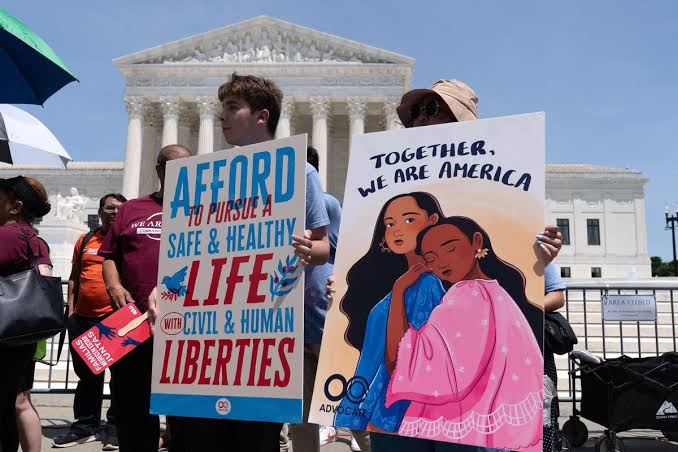
- Move follows Supreme Court’s 6-3 ruling upholding constitutional birthright citizenship protections
- Estimates suggest between 5,000 and 26,000 births annually may be linked to birth tourism, a small fraction of total U.S. births
What Happened
The Justice Department issued an internal memo directing federal prosecutors across the country to prioritize investigations and prosecutions of birth tourism schemes, just one day after the Supreme Court ruled against President Trump’s executive order that sought to end automatic citizenship for children born in the United States to parents present unlawfully or temporarily. Colin McDonald, the department’s Assistant Attorney General for Fraud Enforcement, wrote in the memo that the department would “zealously protect the sanctity of United States citizenship by investigating and prosecuting those who fraudulently exploit our immigration system.”
The memo instructs prosecutors to consider a broad range of statutes beyond the immigration violations traditionally used in such cases, including wire fraud, money laundering, and identity theft charges, targeting both the individuals who allegedly misrepresent the purpose of their travel and the commercial networks that facilitate these arrangements. Traveling to the United States specifically to give birth and secure citizenship for a child has long been illegal under existing visa fraud statutes, though officials acknowledge that enforcement has historically been limited.
Speaking publicly on the directive, Deputy Attorney General Todd Blanche characterized birth tourism as a “booming industry” and said the department would work closely with the Department of Homeland Security and immigration enforcement agencies to pursue these cases. “Everybody should agree that it’s a violation of our laws if your intent in coming here, if you’re pregnant, is to have a child become a United States citizen because of our current laws,” Blanche said, framing the crackdown as an area of potential bipartisan agreement despite the broader controversy surrounding birthright citizenship policy.
The directive builds on an earlier “Birth Tourism Initiative” launched by Immigration and Customs Enforcement in April, which directed investigators to focus specifically on the issue ahead of the Supreme Court’s ruling. Following the decision, White House deputy chief of staff Stephen Miller suggested on Fox News that the administration needed to “think very carefully” about who is permitted entry into the country, even temporarily, while Department of Homeland Security Secretary Kristi Noem’s successor, Markwayne Mullin, floated the possibility of restricting travel by pregnant foreign nationals altogether, an idea that has not yet been formally implemented.
The scale of birth tourism remains disputed. The Migration Policy Institute has estimated that up to 26,000 babies born annually in the United States could be attributed to the practice, representing a small fraction of the more than 3.5 million total U.S. births each year, while other estimates place the figure closer to 5,000. The federal government does not maintain an official tally of birth tourism cases, complicating efforts to assess the true scope of the practice the administration is now targeting through expanded criminal enforcement.
Why It Matters
The DOJ’s pivot to criminal enforcement represents a significant strategic shift after the administration’s primary legal tool for addressing birthright citizenship, an executive order reinterpreting the 14th Amendment, was struck down by the Supreme Court in a decision that included two of the court’s conservative justices siding with the liberal minority. Rather than abandoning the broader policy goal, the administration is now pursuing a narrower but potentially more durable path through existing criminal statutes that do not require reinterpreting constitutional text.
For immigration policy more broadly, the shift illustrates how the administration is adapting its enforcement strategy in the wake of significant judicial setbacks, turning to prosecutorial discretion and criminal law as tools to achieve policy objectives that courts have found constitutionally out of reach through direct executive action. This approach may prove more legally durable, since it relies on statutes already enacted by Congress rather than a novel and contested interpretation of constitutional citizenship provisions.
The crackdown also raises significant questions about how aggressively immigration and customs officials can question pregnant travelers at ports of entry, a practice that touches on sensitive constitutional and privacy considerations. Immigration attorneys have noted that federal customs officers face legal limitations on how directly they can question visa applicants about pregnancy status, meaning the practical implementation of the new enforcement priority remains uncertain.
Economic and Global Context
The birth tourism industry, to the extent it exists as characterized by administration officials, reportedly involves commercial operators in countries including China who market travel packages specifically designed to help expectant mothers give birth in the United States. Some estimates place the cost of such packages in the tens of thousands of dollars per arrangement, reflecting a niche but reportedly profitable commercial enterprise that the DOJ’s directive now explicitly targets for prosecution.
Diplomatically, the issue carries particular sensitivity given the roughly decade-long reciprocal visa agreement between the United States and China, under which consular officers have historically been directed not to deny visa applications from Chinese travelers even when birth tourism is suspected as the primary purpose of travel. Following the Supreme Court’s ruling, Trump posted on social media referencing China directly, a comment that drew attention to the geopolitical dimension of the broader birthright citizenship debate.
The economic impact of the enforcement crackdown on the broader U.S. healthcare and hospitality sectors serving birth tourism clients, concentrated in states like California and Florida, remains unclear, though hospitals in some regions have previously reported challenges related to unpaid medical bills associated with foreign birth tourism patients, an issue separate from the immigration and fraud questions now driving the DOJ’s enforcement priorities.
Implications
In the near term, the practical impact of the DOJ’s directive will depend heavily on how aggressively individual U.S. Attorney’s offices pursue new cases, since the memo itself does not announce specific investigations or name particular statutes beyond directing prosecutors to consider the full range of available fraud charges. Legal analysts note that meaningful enforcement will require sustained resource commitment and coordination between DOJ, DHS, and consular officials abroad.
For Republicans in Congress, Justice Kavanaugh’s concurring opinion in the birthright citizenship case explicitly pointed toward a legislative path forward, suggesting that lawmakers, rather than the executive branch alone, may need to act if the administration wishes to more fundamentally address citizenship policy. This creates a potential opening for future legislative proposals, though such efforts would likely face significant hurdles in an evenly divided Congress.
For foreign nationals traveling to the United States, particularly pregnant women from countries with established birth tourism industries, the crackdown signals increased scrutiny at ports of entry and greater legal risk for those found to have misrepresented the purpose of their travel, even as the underlying constitutional right to citizenship for children born on U.S. soil remains firmly intact following the Supreme Court’s ruling.
Sources

