Story Highlights
- The probe is focused on Hoffman’s Chicago-based nonprofit, American Future Republic, which helped pay some of Carroll’s legal costs.
- Investigators are examining whether Carroll lied in a 2022 deposition when she said her lawyers were working on contingency.
- Hoffman publicly accused Trump of using the investigation to “silence women” and suppress political opposition.
What Happened
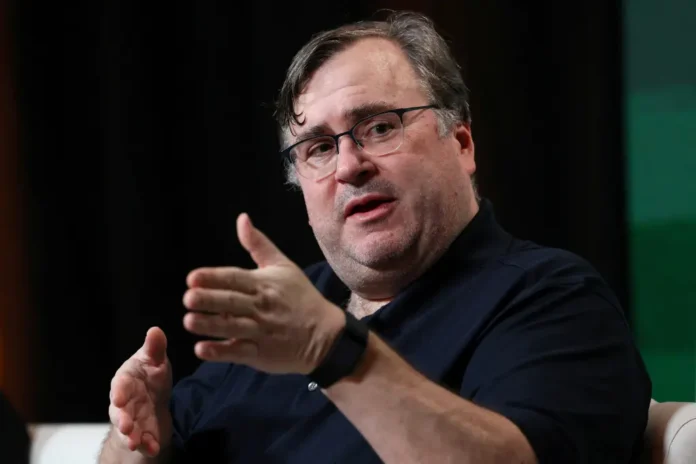
The Justice Department has opened a criminal investigation involving E. Jean Carroll‘s lawsuits over her sexual abuse allegations against President Donald Trump, according to two sources familiar with the matter. The probe is focused on a trust founded by billionaire Democratic donor Reid Hoffman, whose nonprofit helped pay some of Carroll’s legal costs.
The allegations under investigation include possible money laundering, obstruction, and conspiracy, one of the sources said. The investigation is based in the federal prosecutor’s office in Chicago, where Hoffman’s organization, American Future Republic, is headquartered, and it is in its early stages.
The DOJ is specifically looking into whether Carroll lied during her 2022 deposition when she said her lawyers were working on her legal case against Trump on contingency. Her lawyers later disclosed that Hoffman’s nonprofit, American Future Republic, helped fund Carroll’s legal battle. That late disclosure became the central factual basis for the investigation.
The investigation raises concerns about a pattern of retaliation against Trump critics while testing the independence of DOJ officials. Hoffman, a LinkedIn co-founder, has donated millions to Democratic causes and the party over the years and is a longtime Trump critic. The president previously alleged Hoffman is a funder of “radical left” groups that promote political violence.
Hoffman publicly responded to the investigation, saying in a post on X that Trump “is investigating me because I supported E. Jean’s lawsuit — where a jury found Trump liable for sexually assaulting her, and a court of appeals upheld the decision.” He characterized the probe as an attempt to silence financial supporters of Trump’s opponents and to concentrate presidential power.
Why It Matters
This investigation carries significance that extends well beyond the legal details of one civil case. The DOJ probe is the latest move by the Trump administration to target the president’s perceived political foes, including multiple attempts by the department to prosecute former FBI Director James Comey and New York Attorney General Letitia James. The accumulation of these cases has prompted critics to argue that the Justice Department under Trump has become an instrument of political retribution rather than independent law enforcement.
The Carroll case was itself a landmark legal proceeding. A New York civil jury found Trump liable for sexually assaulting Carroll and ordered him to pay substantial damages — a verdict that was subsequently upheld on appeal. The DOJ investigation into how Carroll’s lawyers were funded therefore touches on a completed legal proceeding in which Trump was found culpable, raising questions about whether the probe is designed to delegitimize that outcome.
The targeting of a major Democratic donor also introduces a chilling dynamic into political fundraising. If DOJ can open criminal investigations into the financing structures behind civil lawsuits brought by private citizens against the president, future donors and advocacy groups may hesitate before financially supporting litigation that challenges the administration. That potential deterrent effect — regardless of whether charges are ever brought — is part of what Hoffman and his allies argue is the investigation’s true purpose.
The probe also tests the institutional boundaries of prosecutorial discretion. Career prosecutors and legal scholars have raised concerns about whether the factual and legal predicate for an investigation of this scope meets the standards traditionally required to justify a federal criminal probe, particularly one touching on activities related to funding constitutionally protected litigation.
Economic and Global Context
While the Carroll-Hoffman investigation is not primarily an economic story, it occurs within a context that has financial and market dimensions. Hoffman is not just a political donor — he is the co-founder of LinkedIn and a major figure in the venture capital and technology ecosystem. A sustained federal criminal investigation involving a prominent Silicon Valley investor sends signals to the business and entrepreneurial communities about the risks of visible political opposition to the administration.
The use of federal legal resources for an investigation of this nature also raises questions about prioritization. The DOJ operates under significant resource constraints, and the decision to dedicate prosecutorial attention in Chicago to examining the nonprofit financing of a civil lawsuit — rather than more traditional criminal matters — reflects a specific set of institutional choices made at the highest levels of the department.
The investigation’s focus on American Future Republic, a nonprofit operating in the charitable and civic engagement space, could also have broader implications for organizations that fund legal advocacy. If the DOJ establishes a precedent that nonprofits assisting private plaintiffs in politically sensitive litigation face criminal exposure, the chilling effect on civil society organizations and donor-supported legal defense funds could be substantial.
For international observers and U.S. allies, the pattern of DOJ actions under Trump raises questions about judicial independence and the rule of law in America — values that Washington routinely cites in its foreign policy and human rights diplomacy. Those reputational considerations, while difficult to quantify, form part of the broader context in which this investigation lands.
Implications
The most immediate legal consequence is for Hoffman and his organization, which now faces the costs and disruptions of a federal criminal investigation regardless of its ultimate outcome. Even if no charges are ever filed, the investigation imposes legal fees, reputational risk, and operational disruption on an organization and individual that the president has publicly identified as political enemies.
For Carroll, the investigation reopens questions around her testimony in a case that she already won in court. Even if she is not the primary target, being associated with an active criminal probe carries personal and professional consequences, and it may discourage other potential plaintiffs from bringing civil suits against powerful defendants who have access to the DOJ machinery.
For the Trump administration, the investigation is a double-edged political instrument. Supporters will view it as legitimate accountability for what they characterize as lawfare funded by partisan donors. Critics — including many in the legal community — will argue that it confirms their concerns about the politicization of federal law enforcement, an issue that could energize Democratic voters ahead of midterms.
Congress will face mounting pressure to respond. Oversight committees controlled by Republicans have generally declined to challenge the administration on DOJ matters, but investigations into high-profile donors with deep connections in the business and media communities have a way of expanding in scope and attracting scrutiny that is difficult to contain.
Sources

