Story Highlights
- Trump rejected Iran’s latest ceasefire counterproposal, calling it “a piece of garbage,” and declared the truce on “massive life support”
- Acting Pentagon Comptroller Jules Hurst testified the war has cost the U.S. $29 billion — $4 billion more than figures provided to Congress two weeks prior
- Iran’s parliament warned its military is prepared to respond to any U.S. aggression, while inflation hit 3.8% in April, driven heavily by energy costs
What Happened
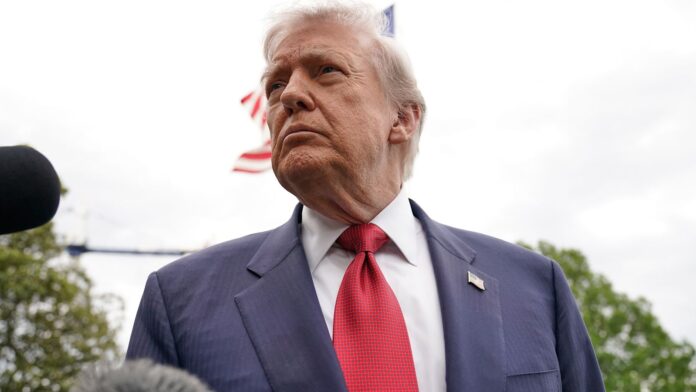
The fragile ceasefire that took effect between the United States and Iran in early April is on the verge of collapse following a sharp exchange of rejections between Washington and Tehran. President Donald Trump, speaking at the White House before departing for Beijing, called Iran’s latest response to the U.S. peace framework “just unacceptable” and delivered a bleak assessment of the truce’s prospects. “I would call it the weakest right now, after reading that piece of garbage they sent us — I didn’t even finish reading it,” Trump said. “Right now it’s on life support.”
The core dispute centers on sequencing and the nuclear question. The Trump administration’s proposal demanded Iran immediately commit to ending its nuclear program, among other conditions. Tehran responded with a phased approach that would defer nuclear discussions to later stages of negotiations, prioritizing first an end to all hostilities, lifting of sanctions, and resolution of the Strait of Hormuz standoff. Iran’s foreign ministry described its counterproposal as “reasonable” and “generous.” Trump flatly disagreed.
The parliament speaker of the Islamic Republic of Iran warned Wednesday that the country’s military is ready to respond with force if attacked, signaling that Tehran is not prepared to simply capitulate to Washington’s demands. Some senior Trump administration aides are now reportedly advising the president to more seriously consider resuming major combat operations, according to sources familiar with internal deliberations. Acting Pentagon Comptroller Jules Hurst told Congress this week that the total cost of the war has now reached $29 billion — $4 billion higher than the figure Defense Secretary Pete Hegseth provided just two weeks ago.
Both sides have continued to exchange fire in the Strait of Hormuz since the ceasefire technically took effect, and Israel has conducted airstrikes in Lebanon despite a separate truce there, killing at least 13 people in recent days. The multi-theater complexity of the conflict — spanning Iran, the Strait of Hormuz, Lebanon, and Iraq — has made a comprehensive peace agreement extraordinarily difficult to negotiate, with each party insisting on definitions and conditions that the others refuse.
Why It Matters
The potential resumption of full-scale combat operations with Iran would represent one of the most significant military escalations the United States has undertaken in decades. Unlike the initial campaign launched in late February, a renewed offensive would come with global partners better informed about the costs and complexities of the conflict, and with both sides having already absorbed significant punishment. The domestic political implications for Trump and the Republican Party are equally severe.
The war’s impact on everyday American life has been profound and measurable. Gasoline prices have risen from $2.98 per gallon when hostilities began to $4.52 as of this week. Diesel prices are approaching an all-time high, adding substantial costs to food transportation, manufacturing, and logistics across the entire economy. The April Consumer Price Index showed inflation running at 3.8 percent annually — its highest level in nearly three years — with energy costs responsible for roughly 40 percent of that increase.
The administration’s legal standing on the conflict is also under scrutiny. The War Powers Resolution of 1973 requires the president to terminate the use of force within 60 days unless Congress has declared war or authorized force. That deadline passed on May 1. The Trump administration contended that the ceasefire ended “hostilities” and therefore stopped the clock. Senate Democrats have made six separate attempts to pass resolutions limiting Trump’s war powers, none of which have succeeded.
Economic and Global Context
The financial cost of the Iran conflict is expanding rapidly and in ways that may not be fully captured by official Pentagon estimates. Defense budget expert Linda Bilmes has noted that replacement costs for weapons systems are often substantially higher than their historical inventory values. A Tomahawk missile valued at $2 million in inventory, for instance, can cost up to $3.5 million to replace today. Medium and long-term costs will include repairing damaged military facilities over the next four to five years, restocking with higher-technology systems, and providing veterans’ care for approximately 55,000 U.S. troops currently deployed in the region.
Energy markets are feeling the pressure globally. The U.S. Department of Energy has forecasted oil prices will remain above $100 per barrel in the near term. Analysts are warning that average pump prices could eventually reach $5 per gallon nationally. One of the world’s largest onshore gas processing facilities, located in the United Arab Emirates, was damaged by Iranian strikes and will not return to full capacity until 2027. A significant oil spill continues to spread off Iran’s Kharg Island, with satellite imagery showing it fragmenting southward.
Saudi Arabia reportedly conducted covert strikes on Iranian targets in response to Iranian attacks on the kingdom, according to a Reuters report citing two Western officials — an indication that the regional conflict has expanded beyond a simple U.S.-Iran binary. The Strait of Hormuz remains a chokepoint for global oil shipments, and Iran’s demonstrated ability to disrupt transit there gives Tehran ongoing leverage that no ceasefire has yet fully neutralized.
Implications
If the ceasefire collapses and the U.S. resumes major combat operations, financial markets will likely react sharply, with oil prices potentially spiking well beyond $100 per barrel and global inflation pressures intensifying. American consumers, already burdened by elevated energy and food costs, would face renewed economic strain heading into what promises to be a politically consequential fall midterm season.
For Trump, the stakes of the Beijing summit are magnified. Any signal from Chinese President Xi Jinping that Beijing will apply pressure on Tehran to return to negotiations in good faith would give the administration crucial diplomatic cover. Without that, Trump faces an unenviable choice between a peace agreement his base may see as too weak and a military resumption that polls show most Americans oppose.
Congressional Republicans, who have largely deferred to the president on foreign policy, are watching nervously. With November approaching and Trump’s approval ratings at historic lows, the political sustainability of an extended, expensive, and inconclusive military campaign is becoming a serious concern within the party. What happens in Beijing this week may determine the trajectory of both the war and the 2026 midterm elections.
Sources
“Iran threatens to ‘teach a lesson’ if U.S. attacks, Trump says ceasefire is ‘on life support”

