Story Highlights
- Paxton defeated Cornyn after Trump endorsed him one week before the May 26 runoff, citing Cornyn’s failure to back him “when times were tough” during the 2024 presidential primary
- The Republican primary contest cost more than $125 million in total advertising, making it one of the most expensive intraparty Senate races in American history, with the pro-Cornyn side spending the majority
- Senate Minority Leader Chuck Schumer declared Democrats are “one step closer to winning a Senate majority” and Cook Political Report shifted the Texas Senate race rating toward Democrats following the result
What Happened
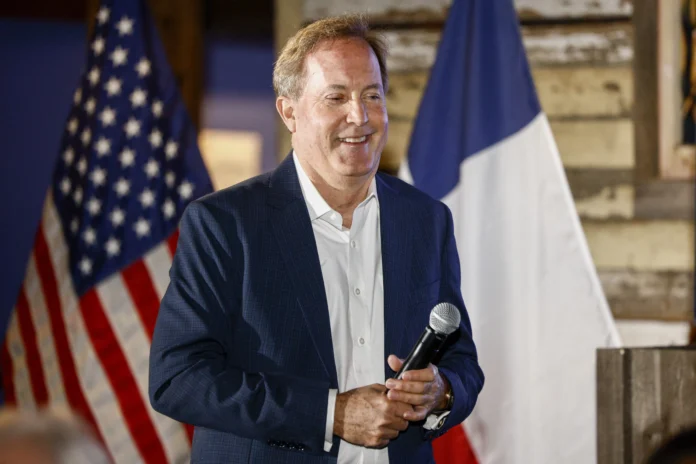
Ken Paxton, the scandal-plagued Texas Attorney General, defeated incumbent U.S. Senator John Cornyn in the Republican Senate runoff election on May 26, emerging as the GOP nominee for the seat after one of the most bruising and expensive intraparty contests in Texas history. The result was driven in decisive part by a last-minute endorsement from President Donald Trump, who threw his weight behind Paxton just seven days before voting concluded.
Trump had stayed on the sidelines for months as the two candidates — both Trump supporters — fought through a crowded March primary field. Neither cleared the 50 percent threshold required to avoid a runoff. Cornyn led the first round with approximately 42 percent of the vote to Paxton’s 40.5 percent, and Senate Republican leadership, including Senate Majority Leader John Thune, had lobbied the White House intensively to back their colleague. Cornyn had compiled a 99 percent voting record in alignment with Trump’s position.
Trump’s decision to endorse Paxton on May 19 nonetheless came with a pointed explanation. In his Truth Social post, the president called Paxton a “true MAGA Warrior” and took direct aim at Cornyn’s past hesitation, noting that the senator “was very late in backing me” during the 2024 Republican presidential primary and had not been supportive “when times were tough.” The move sent shockwaves through the Senate GOP caucus, which had invested heavily in Cornyn’s reelection.
The two campaigns and their outside allies spent nearly $25 million in advertising during the runoff alone, bringing the total cost of the Republican primary to roughly $125 million — the vast majority of which came from the pro-Cornyn side. Despite that financial advantage, Cornyn was unable to overcome Trump’s late intervention. Paxton’s victory made Cornyn the latest in a string of Republican incumbents Trump has unseated in 2026 primaries, a list that includes Louisiana Senator Bill Cassidy, Kentucky Representative Thomas Massie, and five Indiana state senators.
Paxton enters the general election facing Democratic nominee James Talarico, a state legislator whom Democrats believe has a genuine chance of winning given Paxton’s extensive legal and ethical history. Paxton was impeached by the Texas House in 2023 on corruption and bribery charges — he was later acquitted by the Texas Senate — and has faced years of accusations of misconduct that Republicans concede will be central to Democratic campaign messaging in November.
Why It Matters
The Texas result is a defining moment in Trump’s ongoing reshaping of the Republican Party before the 2026 midterms. By targeting Cornyn — one of the Senate’s most institutionally significant Republican figures and a close ally of Senate leadership — Trump demonstrated that no Republican incumbent is beyond his reach if their loyalty is deemed insufficient. The willingness to topple a four-term senator with deep Texas roots signals that the consolidation of MAGA control over the GOP nominee pipeline is operating at full force.
For the Republican Party’s Senate majority, however, the result creates strategic risk. Cook Political Report’s shift of the Texas Senate race toward Democrats following the runoff outcome reflects a broader concern among Republican strategists that Paxton’s legal baggage and national profile could make a seat that was previously considered safe into a competitive November contest. Texas Democrats have not won a statewide race since 1994, but the combination of Paxton’s vulnerabilities and an energized Democratic Party could change that.
The episode also illustrates the growing tension between Trump’s personal political agenda — punishing Republicans who showed insufficient loyalty — and the party’s collective interest in defending Senate seats. Cornyn was broadly seen as a reliable general-election candidate capable of running comfortably in a state Trump has carried by double digits. Paxton is a more volatile proposition, and the burden of defending that choice falls on the entire party.
Economic and Global Context
The Texas Senate race carries economic significance beyond state borders. Texas is the second-largest economy in the United States, home to major energy, technology, and financial industries. The state’s Senate delegation plays a direct role in shaping federal energy policy, tax legislation, and regulatory frameworks that affect American businesses and consumers. The question of whether Texas elects a senator closely aligned with Trump’s MAGA agenda or a Democrat running on economic relief messaging will shape federal legislative dynamics for the next six years.
Campaign spending in the race — exceeding $125 million in the Republican primary alone — reflects the enormous financial stakes of Senate control. Senate seats directly determine which party controls the legislative agenda, committee chairmanships, and confirmation of federal judges and executive branch officials. Business interests on both sides of the partisan divide have invested accordingly.
The general election will also test whether Trump’s brand of conservative populism, which commands primary electorates, can translate into general election wins in states where the broader electorate is more moderate.
Implications
For Paxton, the November general election against Talarico will be one of the most closely watched Senate contests in the country. Democrats are already mounting an aggressive fundraising operation, and the DSCC has signaled it will invest heavily in Texas as a potential pickup opportunity. Paxton’s impeachment history, corruption allegations, and combative persona will define the contrast Democrats draw.
For Senate Republican leadership, the Texas outcome creates a difficult math problem. With Cornyn out and the seat now in play, Thune and his team must manage a general election environment in Texas that was not part of their original defensive calculus. The anti-weaponization fund dispute and broader Senate-White House tensions have already strained the relationship. Adding a competitive Texas race to the defensive map further complicates the GOP’s path to retaining its 53-seat majority.
For Trump, the endorsement’s outcome reinforces his standing as the party’s most effective kingmaker heading into November. His track record in May primaries — winning eight of ten races against incumbent Republicans — demonstrates that the threat of a Trump endorsement against a sitting lawmaker remains the most powerful disciplinary tool in Republican politics today.
Sources
“Paxton bests Cornyn in Texas Republican Senate primary after Trump endorsement”

