Story Highlights
- Kevin Warsh is preparing to chair his first Federal Reserve policy meeting on June 16–17.
- Markets widely expect the Fed to hold interest rates steady as inflation risks remain elevated.
- Warsh takes over after a politically charged transition and will face immediate pressure from President Donald Trump for lower rates.
What Happened
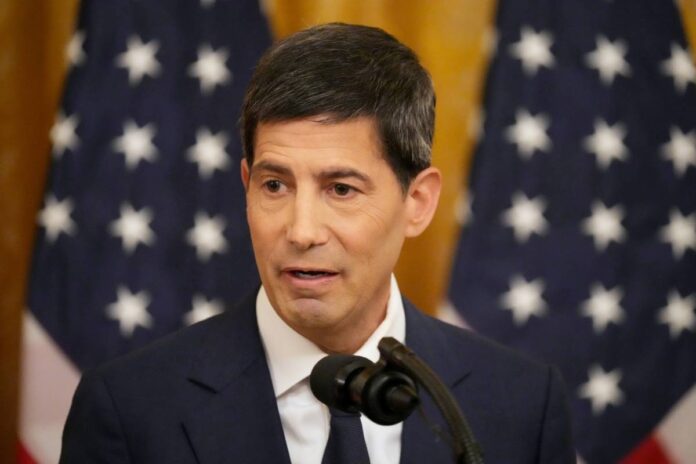
Kevin Warsh has taken over as chair of the Federal Reserve with his first major policy meeting only days away, placing him immediately at the center of a high-stakes debate over inflation, interest rates, and central bank independence.
The Federal Open Market Committee is scheduled to meet on June 16–17, giving Warsh his first opportunity to lead the central bank through a formal rate decision and post-meeting press conference.
- Warsh’s first FOMC meeting as chair is set for June 16–17.
- Markets are expecting the Fed to keep rates unchanged.
- His first public message as chair will be closely watched by investors, lawmakers, and the White House.
Warsh inherits a divided and politically sensitive central bank. Inflation remains above the Fed’s 2 percent target, energy prices have added fresh pressure, and some policymakers have warned that rates may need to stay higher for longer.
At the same time, Trump has repeatedly pushed for lower interest rates, arguing that cheaper borrowing would support economic growth, reduce pressure on consumers, and strengthen the administration’s economic message ahead of the midterms.
Warsh has signaled that he wants to bring a different style to the Fed, including a smaller balance sheet, tighter communications, and a more restrained approach to forward guidance than the Powell era.
Why It Matters
The transition matters because the Fed’s decisions directly affect mortgage rates, credit cards, auto loans, business investment, federal debt costs, and market confidence.
Warsh’s first meeting will not only be about whether rates change. It will also be about how he frames the Fed’s next phase: whether the central bank remains cautious, prepares for eventual cuts, or starts warning more openly about the possibility of renewed inflation pressure.
- A steady-rate decision would show caution in the face of inflation.
- A dovish message could please Trump but worry inflation hawks.
- A hawkish message could reassure markets on inflation but anger the White House.
The IMF has urged the Fed to proceed carefully, warning that inflation risks remain elevated because of energy shocks, tariffs, and broader price pressures. That advice puts Warsh in a difficult position before he has even chaired his first meeting.
For Republicans, the Fed’s posture has immediate political consequences. If borrowing costs remain high, voters may continue to feel pressure from mortgages, credit-card debt, small-business loans, and consumer financing.
Economic and Global Context
Warsh takes over at a challenging moment for the U.S. economy. Inflation has remained stubborn, the job market has shown resilience, and global energy disruption has complicated the Fed’s path.
Recent economic data has created a difficult mix for policymakers: stronger hiring on one side, but persistent price pressure on the other. That combination makes aggressive rate cuts harder to justify, even as the White House pushes for easier policy.
- Persistent inflation makes early rate cuts politically and economically risky.
- Strong labor data could strengthen the case for keeping rates elevated.
- Energy-market volatility adds uncertainty to the inflation outlook.
Internationally, other central banks will watch Warsh closely. The Bank of England, European Central Bank, Bank of Japan, and emerging-market central banks all take signals from Fed policy because U.S. rates affect global currencies, capital flows, and borrowing costs.
A more hawkish Fed could strengthen the dollar and pressure foreign borrowers. A more dovish Fed could ease global financial conditions but raise questions about whether the central bank is responding to political pressure.
Political and Public Context
Warsh’s appointment comes after months of tension between Trump and outgoing Fed Chair Jerome Powell. Trump repeatedly criticized Powell for keeping rates too high and made clear that he wanted a chair more willing to support lower borrowing costs.
Warsh now has to prove two things at once: that he understands the administration’s growth agenda, and that he will protect the Fed’s independence when monetary policy conflicts with political demands.
- Trump wants lower rates to support growth and ease borrowing costs.
- Markets want evidence that Warsh will not politicize monetary policy.
- Fed officials want continuity and credibility during the transition.
The White House has publicly said it wants Warsh to be independent, but investors will judge that claim by his decisions and language. His first press conference may therefore matter almost as much as the rate decision itself.
If Warsh sounds too aligned with Trump, markets may worry about political interference. If he sounds too hawkish, he could immediately trigger tension with the president who appointed him.
What Happens Next
The June 16–17 meeting will be Warsh’s first defining moment as Fed chair. The central bank is widely expected to hold rates steady, but the statement, economic projections, and press conference will reveal how Warsh plans to lead.
Investors will watch whether the Fed removes or changes any language suggesting future cuts. They will also focus on the updated “dot plot,” which shows where officials expect rates to move over time.
- A no-change decision is widely expected.
- The bigger question is whether Warsh signals cuts, holds, or possible hikes later in 2026.
- His communication style could define market expectations for the rest of the year.
Warsh’s first hundred days may also include reviews of the Fed’s balance sheet, internal communications, and policy framework. Those changes would not happen overnight, but they could reshape the central bank’s direction over time.
For now, the immediate test is simple but difficult: Warsh must reassure markets that he can control inflation, reassure Trump that he understands the growth agenda, and reassure the public that the Federal Reserve remains independent.
Sources
- IMF urges Fed caution on inflation as Warsh prepares to chair first policy meeting
- Fed’s Warsh inherits economy increasingly squeezed by inflation
- The key to the upcoming Fed meeting? How Warsh reacts to all the hints of a rate hike
- Kevin Warsh sworn in as Fed chair as Trump seeks interest rate cuts

