

Story Highlights
- President Donald Trump accused Democrats of trying to “steal” California’s governor primary as vote counting continued.
- Election officials and news organizations have reported no evidence of widespread fraud in the ongoing count.
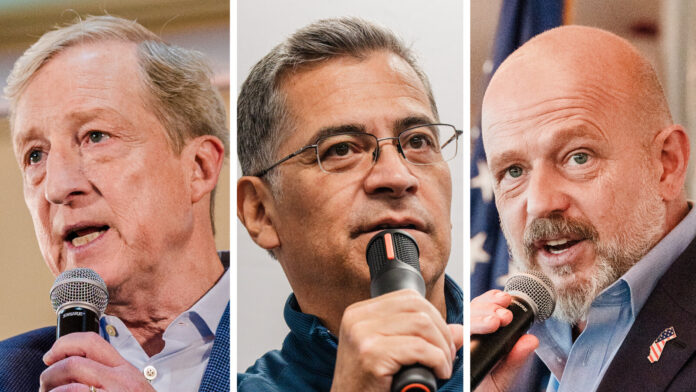
- Xavier Becerra has advanced, while Steve Hilton and Tom Steyer remain locked in the fight for the second general-election spot.
What Happened
President Donald Trump claimed Democrats were trying to steal California’s governor primary as election officials continued counting millions of ballots from the state’s June 2 primary.
Trump posted on Truth Social that the race was being manipulated against Republican candidate Steve Hilton, a former Fox News host and Trump-endorsed contender. He also claimed the vote count was under investigation by federal authorities, though officials and news organizations have described the broader fraud allegation as unsubstantiated.
- California’s governor primary remains unsettled because millions of ballots are still being processed.
- Mail ballots can take days to count under California law.
- There is no confirmed evidence of widespread fraud in the governor’s race.
The race is unfolding under California’s top-two primary system, where all candidates appear on the same ballot and the two highest vote-getters advance to the November general election regardless of party.
Former Health and Human Services Secretary Xavier Becerra has secured a spot in the general election. The second slot remains the central fight, with Hilton and Democratic billionaire Tom Steyer competing as later-counted ballots continue to shift the margins.
The slow count has created political tension. Republicans argue the delay raises questions, while California election officials say the process is normal in a large vote-by-mail state where ballots can arrive after Election Day if they were postmarked on time.
Why It Matters
The dispute matters because California’s governor race is one of the most visible statewide contests of the 2026 midterm cycle. Gov. Gavin Newsom is term-limited, leaving the seat open for the first time in years.
If Hilton advances, Trump would have a Republican standard-bearer in the nation’s largest Democratic-leaning state. If Steyer overtakes him, the November race could become an all-Democratic contest, shutting Republicans out of the general-election ballot.
- A Hilton advance would give Trump a symbolic foothold in California’s governor race.
- A Becerra-Steyer matchup would be a major setback for California Republicans.
- The delayed result gives Trump more room to push claims about election integrity.
Trump’s fraud claim also matters because it echoes his long-running criticism of mail-in voting. California relies heavily on vote-by-mail, and state officials have repeatedly defended the system as secure, transparent, and governed by clear deadlines.
Election experts say slow counting is not evidence of fraud. In California, large numbers of mailed ballots are verified, processed, and counted after Election Day, which can cause major races to remain unresolved for days or even weeks.
Political and Public Context
The governor’s race has national implications because California is central to Democratic power, technology policy, climate regulation, immigration debates, and House control.
Trump’s endorsement of Hilton gave the Republican candidate a major boost among conservative voters, but it also made him more polarizing in a state where Trump remains deeply unpopular with many general-election voters.
- Hilton is running as a Trump-aligned Republican in a heavily Democratic state.
- Becerra is seeking to consolidate Democratic voters after years in state and federal office.
- Steyer’s late movement in the count has kept the second-place fight alive.
The primary also affects California’s congressional landscape. With dozens of House seats and several competitive districts, turnout and voter enthusiasm in the governor’s race could influence down-ballot contests in November.
Trump’s claims may energize some Republican voters, but they could also create challenges for GOP campaigns that need supporters to trust and use mail ballots in a state where mail voting is central to election participation.
Constitutional and Legal Context
The legal issue is not whether candidates are entitled to immediate results, but whether the state is following its election laws. California allows mail ballots to be counted after Election Day if they are properly postmarked and received within the legal window.
That means the count can change after election night, especially in close races. Those shifts are common in California elections and do not, by themselves, indicate misconduct.
- California election officials must verify signatures and process mail ballots before counting them.
- The state has until certification deadlines to finalize results.
- Unverified fraud claims can increase pressure on local election workers and public trust.
Trump’s claim that federal authorities are involved adds another layer of concern. If the Justice Department or U.S. Attorney’s Office intervenes in an active state election without clear evidence of wrongdoing, it could raise questions about federal pressure on state election administration.
For now, the central reality is that the count is still ongoing. The outcome will depend on legally submitted ballots that have not yet been fully processed.
What Happens Next
California counties will continue counting and reporting ballots in the coming days. The most important question is whether Hilton can hold the second-place position or whether Steyer can overtake him as late ballots are added.
If Hilton advances, the November race will become a Becerra-versus-Hilton contest that tests whether a Trump-endorsed Republican can compete statewide in California. If Steyer advances, the general election will become an all-Democratic fight.
- More results are expected as counties process remaining mail ballots.
- The second-place contest remains the key unresolved question.
- Final certification may take weeks under California’s normal election calendar.
Trump is likely to keep attacking the process if the results continue moving against Hilton. California officials, meanwhile, will face pressure to explain the count clearly and defend public confidence in the election.
The race remains unresolved, but one thing is already clear: California’s slow vote count has become a national political flashpoint, with Trump using the uncertainty to revive claims of election theft before the final results are certified.
Sources
- Election 2026 updates: Xavier Becerra, Steve Hilton neck and neck in early results in race for California governor
- California governor’s race: DoJ sends in federal observer over slow count
- Republican drops from top spot in California governor’s race
- Hilton, Becerra maintain leads in primary race for California governor

