President Trump’s allies are intensifying efforts to reshape the Federal Reserve’s Board of Governors after the Supreme Court blocked the administration’s attempt to remove Governor Lisa Cook, according to people familiar with internal discussions. Top officials are exploring alternative avenues to remove sitting board members and clear the way for additional Trump-aligned appointments, with both Cook and former Chair Jerome Powell remaining targets. The renewed campaign comes as inflation concerns complicate the administration’s long-standing push for lower interest rates.
Story Highlights
- The Supreme Court blocked an effort to remove Fed Governor Lisa Cook, though the ruling was narrow
- Trump allies are exploring new avenues to remove board members and install additional loyalists
- About half of Fed officials now believe a rate hike, not a cut, may be needed this year
What Happened
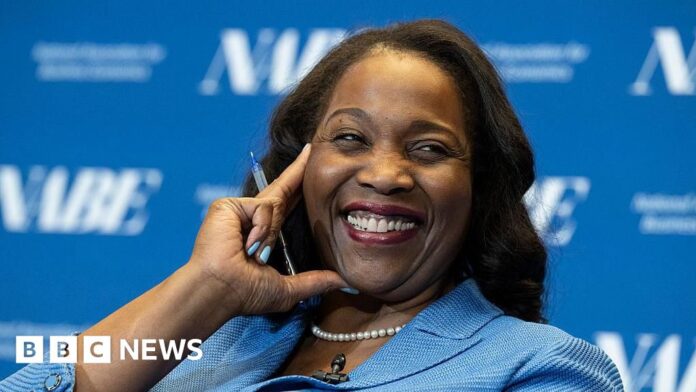
President Trump and his allies are renewing efforts to reshape the Federal Reserve’s Board of Governors after the Supreme Court this week blocked an attempt to remove Governor Lisa Cook from her position. According to people familiar with the matter, top administration officials and outside allies are actively exploring alternative methods to remove members of the board in Washington, seeking to clear the way for additional appointments aligned with the president’s economic priorities. Both Cook and former Fed Chair Jerome Powell, who remains on the board despite his chairmanship ending, continue to be viewed as targets for removal efforts, according to people who spoke on condition of anonymity.
The Supreme Court’s ruling reinforced the Federal Reserve’s independence from the executive branch, though several Fed watchers cautioned that the narrowness of the decision does not fully shield the institution from further political pressure. Trump initially sought to remove Cook by alleging she had committed mortgage fraud, a claim Cook has denied and has fought in court. The case ultimately reached the Supreme Court, which appeared skeptical during oral arguments that the president possessed the legal authority to remove her from her position without cause specific to her conduct in office.
Trump has separately expressed frustration with Powell for remaining on the Fed’s board after his term as chair concluded in May, according to people close to the president. Trump was reportedly particularly upset after Powell accepted the 2026 John F. Kennedy Profile in Courage Award, during which the former chair praised Congress for insulating monetary policy decisions from political pressure. Kevin Hassett, director of the White House’s National Economic Council, publicly escalated criticism of Powell’s continued presence on the board this week, suggesting that a majority of current Fed officials may act out of opposition to Trump rather than policy considerations when casting votes.
Trump’s eventual pick to replace Powell as chair, Kevin Warsh, was seen during his nomination process as broadly aligned with the president’s preference for lower interest rates. However, Fed rate cuts have become increasingly unlikely this year amid renewed inflationary pressure, with roughly half of Fed officials now believing the central bank may instead need to raise rates, according to projections released in June. Several regional Federal Reserve Bank presidents are reportedly among the officials most concerned about the current inflation outlook.
Why It Matters
The renewed campaign to reshape the Fed’s board represents a continuation of one of the most sustained challenges to central bank independence in modern American history. Efforts to remove sitting governors outside of clearly defined “for cause” circumstances raise significant legal and institutional questions about the separation between monetary policy and executive political influence.
For financial markets, continued uncertainty over the composition and independence of the Federal Reserve’s board complicates investor expectations around future interest rate decisions. Markets generally price in greater stability when central bank leadership operates independently of short-term political pressure, and sustained efforts to alter the board’s composition could introduce additional volatility.
For American consumers and businesses, the underlying policy dispute, whether the Fed should cut or raise interest rates, carries direct financial consequences. With inflation pressures already elevated amid ongoing global instability, the outcome of the fight over the board’s composition could meaningfully influence borrowing costs for mortgages, business loans and consumer credit in the months ahead.
Economic and Global Context
The Federal Reserve’s preferred inflation gauge, the personal consumption expenditures price index, showed the annual inflation rate rising to 3.5 percent in March, up from 2.8 percent in February, moving further away from the central bank’s 2 percent target. Prediction markets tracking Fed policy expectations show traders assigning a greater than 80 percent probability that the central bank will hold rates steady at each of its remaining meetings this year, according to data from CME FedWatch.
The economic backdrop complicating the Fed’s decision-making includes the ongoing conflict with Iran, which has driven inflation higher while disrupting oil markets amid effective closures of the Strait of Hormuz. Elevated fuel prices tied to the conflict have added to broader inflationary pressure, making rate cuts increasingly difficult to justify even as the administration continues pushing for lower borrowing costs.
Globally, sustained political pressure on the Federal Reserve’s independence has drawn comparisons to central bank interference in other countries, with economists warning that perceived erosion of institutional independence can undermine investor confidence in a currency and its associated financial markets over the longer term.
Implications
For the Federal Reserve, the coming months will test whether the institution can maintain its independence amid sustained political pressure, particularly if additional legal or legislative avenues are pursued to remove sitting board members beyond Cook and Powell.
For the incoming Fed Chair Kevin Warsh, navigating the competing pressures of the administration’s preference for lower rates against a board increasingly concerned about inflation will shape the early credibility of his tenure, particularly if a rate hike becomes necessary despite Trump’s publicly stated preferences.
For financial markets and businesses, continued uncertainty over the Fed’s composition and policy direction is likely to remain a significant variable through the remainder of the year, with borrowing costs and market volatility tied closely to how the standoff between the White House and the central bank ultimately resolves.
Sources
Trump allies double down on efforts to reshape Federal Reserve

