Story Highlights
- Donald Trump and Xi Jinping are expected to meet in Beijing next week
- Trade disputes and technology restrictions remain central issues in negotiations
- Analysts warn the summit could produce more uncertainty than resolution
What Happened
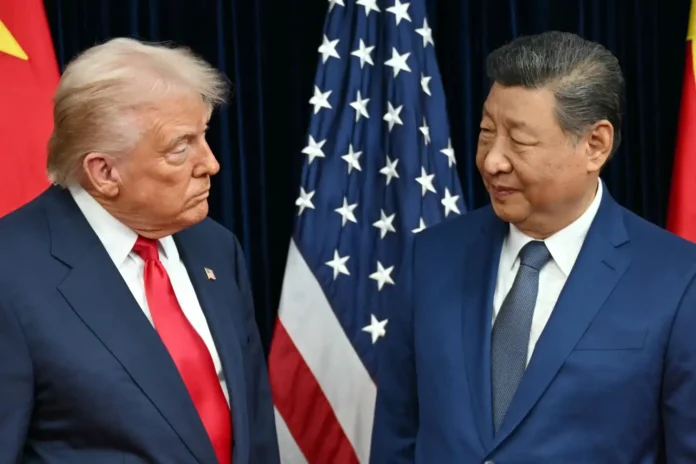
The White House confirmed this week that President Donald Trump is expected to travel to Beijing for a summit with Chinese President Xi Jinping on May 14 and 15. The meeting will mark one of the most significant diplomatic engagements between the two leaders since Trump returned to office and intensified his administration’s trade and industrial policies.
Officials from both governments have released limited details about the summit agenda, though trade imbalances, technology restrictions, and geopolitical tensions are expected to dominate discussions. The administration has continued pursuing tariff measures and export controls aimed at reducing American dependence on Chinese manufacturing and strategic supply chains.
Chinese officials have publicly called for stable economic relations while simultaneously strengthening domestic protections against foreign sanctions and restrictions. Beijing has also expanded measures aimed at securing access to critical resources and industrial technologies amid growing competition with the United States.
Recent trade disputes have placed additional strain on the relationship. The Trump administration continues defending tariff policies as necessary tools for protecting American manufacturing and addressing unfair trade practices. Chinese officials argue the measures disrupt global markets and undermine long-term economic cooperation.
Despite the tensions, both governments appear eager to prevent a complete breakdown in relations. Businesses in both countries remain deeply interconnected through trade, investment, and supply chains. Analysts therefore expect the summit to focus partly on managing competition and avoiding rapid escalation rather than achieving sweeping policy agreements.
Why It Matters
The summit matters because the United States and China collectively shape much of the global economy. Decisions made by Washington and Beijing influence international trade flows, financial markets, technology development, energy demand, and geopolitical stability across multiple regions.
For the Trump administration, the meeting provides an opportunity to reinforce its economic agenda while demonstrating continued leverage in negotiations with China. Trump has repeatedly argued that aggressive trade measures are necessary to reduce dependency on foreign production and protect American workers from unfair competition.
At the same time, American businesses remain heavily exposed to Chinese manufacturing networks and consumer markets. Companies across the technology, agriculture, automotive, and retail sectors are closely monitoring the summit for signals about future tariffs, export controls, and investment restrictions.
The geopolitical implications are equally significant. U.S.-China tensions extend beyond economics into military competition, cybersecurity, artificial intelligence, and regional influence in Asia. Even modest improvements in communication could help reduce risks of misunderstanding during a period of increasing global instability.
Economic and Global Context
Global markets have spent years adapting to the gradual decoupling of parts of the American and Chinese economies. Companies have shifted portions of manufacturing to countries including Vietnam, India, and Mexico in response to tariffs and political uncertainty. However, the United States and China remain deeply connected through trade volumes worth hundreds of billions of dollars annually.
Technology competition has become one of the defining economic issues of the decade. The Trump administration has maintained restrictions on semiconductor exports and other advanced technologies tied to national security concerns. China, meanwhile, has accelerated domestic investment in chip production, artificial intelligence, and industrial self-sufficiency.
Financial markets reacted cautiously to reports surrounding the summit. Investors are hopeful that both governments can avoid additional escalation, though analysts remain uncertain about whether negotiations will produce meaningful policy changes. Economists warned that renewed tariff increases or export restrictions could further slow global growth.
International allies are also watching the summit closely. European governments, Asian trading partners, and multinational corporations all face significant exposure to the U.S.-China relationship. Diplomatic or economic shifts resulting from the meeting could affect investment flows, commodity markets, and strategic alliances worldwide.
Implications
The summit may ultimately serve more as a symbolic demonstration of dialogue than a source of immediate policy breakthroughs. Both governments face domestic political incentives that make major concessions difficult, particularly on trade and national security issues.
Still, even limited agreements could reduce market uncertainty and stabilize communication channels between Washington and Beijing. Business leaders and investors are particularly interested in whether the two governments signal willingness to slow further tariff escalation or restart broader economic negotiations.
Failure to ease tensions could accelerate existing trends toward economic fragmentation and strategic competition. Companies may continue restructuring supply chains away from China, while governments around the world increase efforts to secure domestic manufacturing capacity for critical industries.
For American voters and policymakers, the summit reflects the broader challenge of balancing economic cooperation with strategic rivalry. Trump’s approach emphasizes leverage, industrial protection, and national security, while critics argue prolonged confrontation may raise costs for consumers and businesses. The outcome of the meeting could shape global economic conditions for months to come.
Sources

