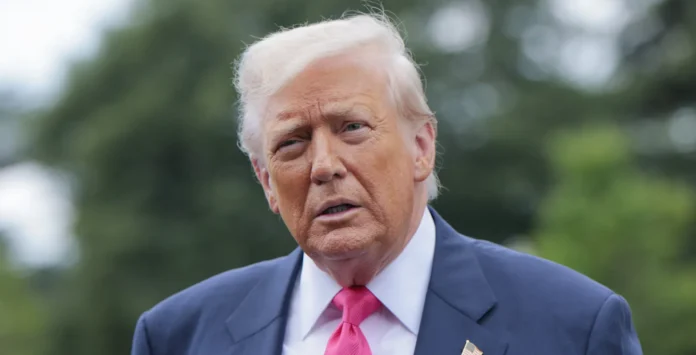
A cluster of major polls released this month paints an increasingly grim picture for President Donald Trump and the Republican Party heading into the 2026 midterm elections. A cluster of national surveys released between May 18 and May 20, conducted between May 11 and May 18, found Trump hitting multiple new approval lows and disapproval highs across key metrics, creating growing pressure on Republican candidates, party strategists, and the White House. With control of both the House and Senate at stake, the numbers represent a serious structural challenge for a party already contending with intra-party tensions and an unresolved war in Iran.
Story Highlights
- A Fox News poll conducted May 15–18 among 1,002 registered voters put Trump’s overall job approval at 39 percent, with 61 percent disapproving — the highest disapproval figure recorded in Fox News polling during Trump’s presidency.
- An April 2026 Emerson College poll found Democrats holding a 10-point advantage on the generic congressional ballot, leading Republicans 50 percent to 40 percent among likely voters.
- An AP/NORC poll showed that 37 percent of Republicans disapprove of Trump’s handling of the economy — the highest recorded level of dissatisfaction within that group.
What Happened
Multiple independent polling organizations have released surveys over the past two weeks showing President Donald Trump‘s approval rating at or near the lowest levels of either of his two presidential terms. The data, drawn from a wide range of methodologies and sample populations, tells a consistent story: voter dissatisfaction with the administration has broadened and deepened, with economic concerns and the Iran war driving the sharpest declines.
A New York Times/Siena College poll found Trump’s disapproval rating at 59 percent, the highest recorded in that survey series. That figure is notable not only for its magnitude but for its source — the Times/Siena poll has historically been one of the more rigorously conducted national surveys, giving the result added credibility in political circles.
Trump’s second-term approval began with a 47 percent inauguration bump, declined steadily through 2025, fell to 41 percent in March 2026, briefly recovered to 43 percent in April, then dropped sharply to 38.1 percent in May 2026 — the lowest approval of either Trump term. Political analysts attribute the May collapse primarily to tariff-driven inflation and concerns about economic management, compounded by the ongoing military conflict with Iran and the recent public disputes with Senate Republicans over the anti-weaponization fund.
Between February and May alone, Republican net approval of Trump fell by 14 points in Fox News surveys. Pollsters say the shift is being driven almost entirely by voter anxiety over affordability and inflation. That erosion among core Republican voters — not just independents or Democrats — is the most politically significant element of the data, as it signals a potential turnout and enthusiasm problem heading into November.
Among Hispanic voters, Democrats break ahead by a 35-point margin at 61 to 26 percent; among women, Democrats lead by 21 points; and among independents, Democrats lead by 19 points, at 50 to 31 percent. These gaps across key demographic categories represent structural vulnerabilities for Republican candidates in competitive districts and states.
Why It Matters
Presidential approval ratings are among the most reliable predictors of midterm election outcomes. Historically, a president whose approval falls below 45 percent faces significant headwinds for his party in congressional elections; below 40 percent, wave conditions become likely. Trump’s current standing places him firmly in territory that, if sustained through November, would favor a substantial Democratic pickup in both the House and the Senate.
Every president who triggered a wave midterm loss saw independent approval fall below 40 percent before Election Day. Trump’s 34 percent independent approval puts him well into wave territory, now below the 36 percent level that preceded Democrats’ 41-seat gain in 2018. For Republican House members representing districts that Trump carried narrowly in 2024, those numbers are cause for serious alarm.
The driver behind the approval decline matters as much as the decline itself. Economic dissatisfaction is particularly durable as a political force because it is felt directly in voters’ daily lives — at grocery stores, gas stations, and mortgage lenders. Abstract debates about foreign policy or constitutional principles can fade from salience; the cost of eggs and rent cannot.
Among those aged 30 to 44, Trump’s approval stood at 28 percent in the AP/NORC poll, compared with 62 percent disapproving. That generation — many of whom are navigating first-time homeownership, childcare costs, and early career financial pressures — represents a demographic that has moved sharply against the administration and will be difficult to win back without tangible economic improvement.
Economic and Global Context
The polling data reflects specific economic conditions. The May decline in approval reflects accelerating tariff-driven inflation and first-quarter GDP coming in at positive 2.0 percent but PCE inflation hitting 4.5 percent — raising stagflation concerns. Stagflation — the combination of slow growth and elevated inflation — is one of the most politically damaging economic environments a sitting president can face, as it forecloses the typical policy responses and creates a no-win communications challenge.
The Iran war has compounded the economic pressure by keeping energy markets volatile. Disruptions to global oil flows through the Strait of Hormuz have contributed to sustained elevated prices for petroleum-derived goods, affecting transportation, manufacturing, and consumer prices broadly. Those costs have been felt most acutely by middle-income households — the swing voters both parties need most.
The global context further complicates the administration’s messaging on economic performance. Trading partners affected by U.S. tariff policy have retaliated or restructured supply arrangements in ways that reduce the efficiency gains American businesses and consumers previously enjoyed. Rebuilding those relationships, even if the administration chooses to do so, takes time — time that is running short before the November elections.
Disapproval of Trump’s handling of the economy increased seven points compared to April 2025, from 49 to 56 percent, while approval remained essentially flat, from 37 to 38 percent. The asymmetry between rising disapproval and flat approval suggests the administration has been unable to convert its policy actions into tangible voter satisfaction, even among those who initially supported the economic agenda.
Implications
For Republican candidates, the polling environment creates difficult choices. Distancing from Trump risks alienating a base that still strongly supports the president; embracing him risks being dragged down by his broader unpopularity in competitive general elections. That dilemma will play out differently across the electoral map, but there is no obvious formula that resolves it cleanly.
Without a catalyst such as a negotiated trade deal reducing tariff costs, a sharp improvement in consumer confidence, or an external event triggering a rally effect, independent approval below 40 percent through the third quarter of 2026 would represent the most challenging midterm environment for House Republicans since 2018. The White House will need to produce visible economic wins before summer’s end if it hopes to change the political trajectory.
The Senate map presents particular challenges. Republicans are defending seats in states where Trump’s approval has fallen fastest — among college-educated voters, suburban communities, and younger demographics. A sustained approval deficit heading into August, when campaign advertising and voter mobilization ramp up in earnest, would leave Republican incumbents fighting on terrain that strongly favors Democratic challengers.
Ultimately, the May polling data represents a warning, not a verdict. Election outcomes are determined in November, not May, and political environments can shift considerably over six months. But the breadth of the current discontent — cutting across economic, foreign policy, and institutional concerns — suggests that a simple messaging adjustment is unlikely to be sufficient. Only tangible change in voters’ lived experience of the economy and the Iran conflict is likely to move the numbers in a meaningful way.

