Story Highlights
- TrumpRx.gov will now feature popular generic medications such as atorvastatin, lisinopril, metformin, and clopidogrel
- GLP-1 weight loss drug users without insurance are projected to save roughly $3,000 per year through the platform
- The administration has now reached Most-Favored-Nation pricing agreements with 17 major pharmaceutical manufacturers
What Happened
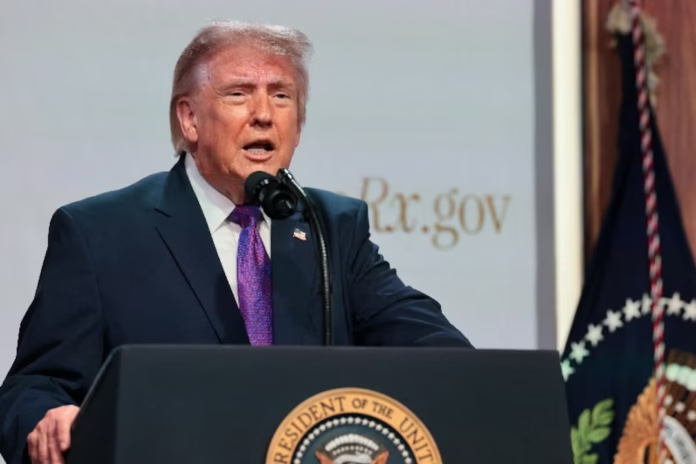
President Donald Trump announced Monday the expansion of TrumpRx.gov to offer Americans direct-to-consumer access to low-cost generic medications in addition to the brand-name drug discounts already available through prior Most-Favored-Nation pricing agreements. The platform, which the administration describes as a historic innovation in drug market transparency, will list widely used generics including atorvastatin for cholesterol, metformin for type 2 diabetes, lisinopril for high blood pressure, and clopidogrel, a blood thinner — drugs taken daily by tens of millions of Americans.
The expansion follows a series of agreements the administration has struck with major pharmaceutical manufacturers since Trump signed his Most-Favored-Nation executive order in May 2025. Under that framework, the administration has required participating manufacturers to make their drugs available to U.S. consumers at prices no higher than the lowest price charged in any comparably developed nation. To date, 17 of the world’s largest drug companies have signed voluntary agreements under the initiative.
The White House fact sheet released Monday cited dramatic price reductions already in effect for patients purchasing through TrumpRx. Amgen’s cholesterol drug Repatha dropped from $573 to $239. Bristol Myers Squibb’s HIV medication Reyataz fell from $1,449 to $217. Boehringer Ingelheim’s diabetes drug Jentadeuto dropped from $525 to $55. Gilead Sciences reduced Epclusa, a Hepatitis C treatment, from $24,920 to $2,425 for direct-to-consumer purchasers.
The platform also lists GLP-1 drugs — the class of popular weight loss medications including branded versions of semaglutide — at significantly reduced prices. The White House projects that patients without insurance coverage for GLP-1s will save roughly $3,000 per year purchasing through TrumpRx. Couples undergoing in-vitro fertilization are projected to save more than $6,000 on fertility medications available through the portal.
In January 2026, Trump called on Congress to codify the savings from the Most-Favored-Nation initiative into law through what the White House has branded the Great Healthcare Plan. The legislation would also count direct-to-consumer purchases at MFN prices toward patients’ deductibles and out-of-pocket maximums, addressing a gap that currently prevents insured patients from fully benefiting from the platform.
Why It Matters
Prescription drug affordability has ranked among the most consistent concerns of American voters for more than a decade, cutting across party lines and demographic categories. By delivering tangible, named price reductions on drugs that millions of Americans recognize and take daily, the administration is converting a regulatory and diplomatic process into a kitchen-table political benefit in a midterm election year.
The addition of generic medications to TrumpRx is strategically significant. Brand-name MFN agreements are impressive on paper but affect a narrower slice of patients who actually purchase those specific drugs. Generic medications, by contrast, are the workhorses of the American pharmacy counter. Making cholesterol medication, blood pressure drugs, and diabetes treatments available at rock-bottom prices reaches a far broader and more politically representative patient base.
The administration has also structured the initiative with an eye toward political durability. By seeking congressional codification through the Great Healthcare Plan and by securing December 2025 agreements with the United Kingdom to raise its own drug prices, the White House is attempting to build the framework into law and trade relationships rather than leaving it vulnerable to reversal by a future administration.
Pharmaceutical industry groups have warned that MFN pricing could reduce investment in research and development of future therapies if manufacturers face global price compression. The administration has countered that high U.S. prices have long subsidized low prices abroad and that equalization is a matter of basic fairness.
Economic and Global Context
The scale of potential savings from the MFN framework is substantial. A White House research paper published earlier this month estimated that voluntary MFN agreements with 17 manufacturers would generate $64.3 billion in federal and state Medicaid savings over the next decade. Those are not hypothetical projections tied to future legislation — they reflect agreements already signed and in effect.
For employers, who collectively pay a substantial share of prescription drug costs through group health insurance, the expansion of TrumpRx introduces a new variable. If direct-to-consumer MFN pricing extends meaningfully into the commercial market, employer plan costs could decrease, providing relief to businesses that have watched pharmaceutical expenditures climb steadily for years. GLP-1 drugs, which can cost employers between $1,000 and $1,500 per member per month, have been a particular pressure point.
Internationally, the administration’s December 2025 agreement with the United Kingdom — which will raise UK drug prices by 25 percent — illustrates the trade dimension of the MFN strategy. The administration is simultaneously pushing foreign governments to pay more and domestic manufacturers to charge less, using tariff threats and market access negotiations as leverage. Critics argue this approach could prompt manufacturers to reduce their presence in foreign markets rather than raise prices, but early results suggest the strategy is producing voluntary cooperation.
The broader pharmaceutical market is watching closely. Not all manufacturers have signed MFN agreements, and the administration has signaled it will pursue rulemaking to impose mandatory pricing if voluntary compliance stalls. That regulatory backstop, which could take months or years to implement, is the enforcement mechanism undergirding the entire initiative.
Implications
The TrumpRx expansion places the administration in a strong political position on an issue that traditionally disadvantages Republicans. Democrats have long championed government negotiation of drug prices; the administration has now built a parallel system that delivers visible, named price reductions without the bureaucratic apparatus of the Inflation Reduction Act’s negotiation program.
For Republican candidates in competitive House and Senate districts, TrumpRx offers a concrete, defensible talking point heading into November. A voter who saves $3,000 a year on a GLP-1 drug or pays $55 instead of $525 for a diabetes medication has a direct economic reason to credit the administration’s health care agenda, regardless of their views on other issues.
The Great Healthcare Plan’s legislative prospects remain uncertain. Congressional Republicans have historically resisted direct government intervention in drug markets, and some members have expressed concern about the precedent set by MFN pricing. Whether leadership can move a codification bill before the midterms will determine whether the program’s gains become permanent or remain vulnerable to future administrative reversal.
For patients, the most immediate implication is access. TrumpRx is a voluntary, direct-to-consumer platform, and not all drugs are available on it. Patients whose medications are not listed, or who prefer to work through their insurer, may see limited immediate benefit. The administration’s push to count TrumpRx purchases toward deductibles could meaningfully change that calculus — but only if Congress acts.
Sources

