Story Highlights
- Trump posted on Truth Social that Iran must move “FAST” or face total destruction, adding “TIME IS OF THE ESSENCE”
- In a phone call with Axios, Trump warned that if Iran does not submit a better deal offer, “they are going to get hit much harder”
- Iran’s foreign minister said Tehran “cannot trust the Americans at all,” calling the ceasefire “shaky”
What Happened
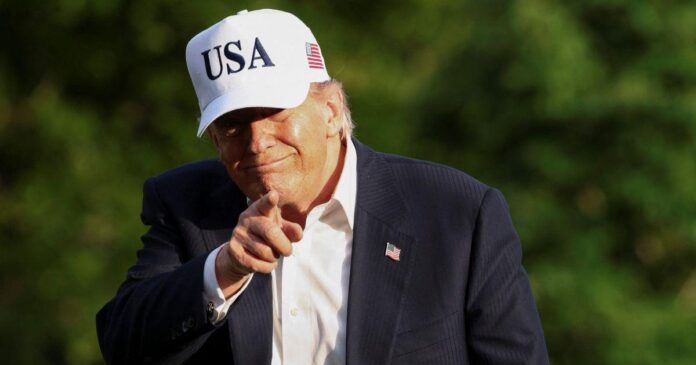
President Donald Trump took to his Truth Social platform on Sunday evening with an unambiguous message directed at Tehran. Writing in all-caps emphasis, Trump declared that Iran had better reach a deal or face consequences, and followed up with a phone call to journalist Barak Ravid of Axios in which he confirmed the warning directly. Trump told Ravid that Iran’s most recent negotiating proposal was unacceptable and that a better offer was required immediately or military escalation would follow.
The warning came after a meeting between Trump and his national security team to review the state of the Iran conflict. Senator Lindsey Graham, speaking on a Sunday morning news program, acknowledged the situation had reached an impasse, saying the U.S. had “hit a wall” in the Iran negotiations. The stalemate reflects the widening gap between what Washington is demanding and what Tehran is willing to concede.
Iran’s latest proposal, according to Iranian state media, calls for a comprehensive end to the war, full U.S. compensation for damages inflicted during the conflict, the lifting of all sanctions, the release of frozen Iranian assets, and formal recognition of Iran’s sovereignty over the Strait of Hormuz. Washington’s response countered with five demands of its own: no compensation, no unfreezing of assets, and limitations on Iran’s nuclear program spanning at least two decades.
Trump has said he wants Iran to suspend its nuclear program for twenty years, stressing it must be a genuine commitment. Meanwhile, new drone attacks struck locations near U.S. allies in the Gulf, fueling fears that renewed full-scale hostilities could break out. The Israeli military was reportedly placed on high readiness for potential renewed strikes on Iran, with Israel awaiting a decision from Trump before taking action.
Why It Matters
The breakdown in Iran diplomacy carries profound consequences for U.S. foreign policy and the stability of an already volatile region. Since major U.S. and Israeli strikes on Iran began in late February, the Middle East has been in a state of prolonged crisis. A formal ceasefire was implemented on April 8, but it has produced little durable progress toward a lasting resolution. Trump’s latest warning indicates that the administration’s patience with the negotiating process is running thin.
For American policymakers, the stakes are enormous. The Strait of Hormuz, through which approximately 20 percent of the world’s oil supply transits, has been a central point of contention throughout the conflict. Trump has asserted that the U.S., not Iran, now controls the strait after effectively dismantling much of Tehran’s armed forces. Any renewed conflict could re-disrupt those shipping lanes and send energy prices climbing again.
For Republican lawmakers, the Iran situation represents both a political challenge and an opportunity. Supporting a commander-in-chief who has prosecuted a major Middle East conflict aggressively resonates with much of the GOP base. But prolonged military engagement without a clear diplomatic endgame carries risks that could become a liability as the 2026 midterm elections approach in November.
The message also sends a clear signal to U.S. allies in the region, particularly Israel and Gulf states, that Washington remains committed to exerting maximum pressure on Tehran. Trump’s tone reinforces that the administration views the current ceasefire as temporary leverage, not a permanent achievement.
Economic and Global Context
The Iran conflict has already had measurable effects on global energy markets. Since the war began in late February, oil prices climbed sharply before partially stabilizing following the April ceasefire. The threat of resumed hostilities has kept energy traders on edge, with markets sensitive to any signal from Washington about the military situation. Brent crude has remained elevated compared to pre-conflict levels, affecting costs across consumer and industrial sectors globally.
China and Russia have both called for a diplomatic resolution, with Beijing specifically warning that the war has put “a heavy strain on global economic growth, supply chains, international trade order and the stability of global energy supply.” That framing aligns with the Chinese position expressed during Trump’s recent summit with President Xi Jinping in Beijing, where the two leaders discussed Iran and reportedly agreed that Tehran should not possess nuclear weapons.
The conflict has also strained U.S. naval resources. The USS Gerald R. Ford aircraft carrier returned to Virginia’s Naval Station Norfolk on May 16 after 326 days at sea, the longest aircraft carrier deployment in fifty years, underscoring the operational tempo at which American forces have been operating.
Iran, for its part, continues to signal openness to talks while rejecting U.S. demands as one-sided. The semi-official Mehr news agency reported that Washington had failed to offer any concrete concessions in response to Tehran’s proposals, deepening the sense of gridlock that Trump’s warning was designed to break.
Implications
Trump’s escalating rhetoric creates an acute decision point for Iranian leadership. The administration has established a clear pattern: issue strong warnings, set informal deadlines, and follow through on threatened consequences if demands are not met. Whether Iran reads this message as a final ultimatum or as negotiating posture will determine whether the ceasefire holds through the coming weeks.
For the broader international community, Trump’s willingness to publicly threaten resumed strikes complicates diplomatic efforts by European nations and the United Nations to broker a more stable arrangement. Allies who have urged restraint now face the prospect of a conflict reignition that could draw in additional regional actors and further destabilize energy markets and global supply chains.
Domestically, the political implications cut in multiple directions. A successful diplomatic resolution would be a significant foreign policy victory for Trump heading into the midterms. A return to active conflict, however, risks deepening public fatigue and could energize opposition voices who have questioned the strategic rationale of the war from its outset.
The next seventy-two hours are likely critical. Trump has indicated he is waiting for an updated Iranian proposal and has not yet set a formal deadline. How quickly Tehran responds, and with what substance, will determine whether the clock runs out.
Sources
“Trump warns Iran ‘clock is ticking’ as new drone attacks hit…”

