Story Highlights
- Pulte, age 37, has no prior intelligence experience and assumes the role without Senate confirmation.
- He will simultaneously continue as FHFA director and chairman of Fannie Mae and Freddie Mac.
- Gabbard was reportedly pushed from the role due to friction with the White House and plans to depart June 30.
What Happened
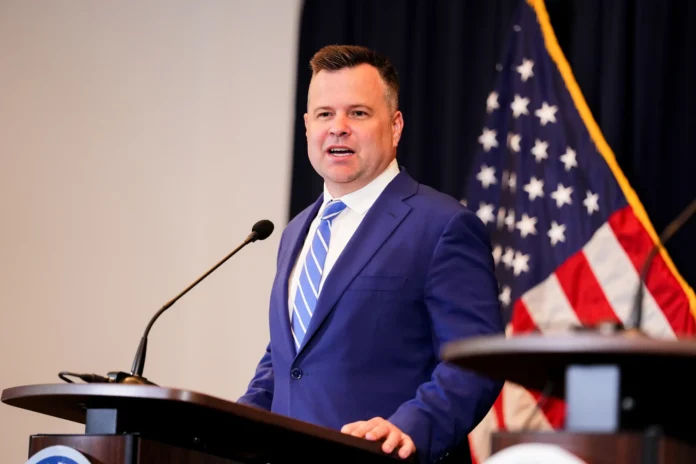
President Donald Trump appointed Bill Pulte, the head of the Federal Housing Finance Agency, as the acting director of National Intelligence, elevating a loyalist with no national-security background to U.S. spy chief. Trump announced the decision Tuesday morning on Truth Social, writing that Pulte brings “deep experience managing the most sensitive matters in America, the safety and soundness of the Markets, and over 10 Trillion Dollars at Fannie Mae/Freddie Mac.” Trump posted on social media Tuesday that Pulte would also remain in his role as FHFA director and as chairman of the government-administered mortgage giants Fannie Mae and Freddie Mac.
Pulte is the grandson of William J. Pulte, founder of PulteGroup, a residential home construction company. He studied broadcast journalism at Northwestern University and founded Pulte Capital in 2011, a private equity firm. Pulte has served as director of the Federal Housing Finance Agency since March 2025 after being confirmed by the Senate in a 56-43 vote. Three Democrats joined Republicans in supporting his nomination: Sens. Angela Alsobrooks of Maryland, Ruben Gallego of Arizona and Elissa Slotkin of Michigan.
During his tenure at the FHFA, Pulte used his position to pursue what critics described as a campaign of political pressure against Trump’s perceived opponents. He filed two criminal referrals against New York Attorney General Letitia James, alleging insurance fraud. He also submitted a criminal referral against Federal Reserve Governor Lisa Cook, accusing her of mortgage fraud. Trump subsequently attempted to fire Cook based on those allegations, and Cook’s case is currently pending before the Supreme Court.
In May 2025, Pulte sent a criminal referral to the Justice Department for Sen. Adam Schiff, D-Calif. The probe into mortgage fraud allegations against Schiff, which he denied, ultimately stalled.
Tulsi Gabbard, Trump’s first director of national intelligence, announced plans to leave the post in May. Reuters reported she was forced from the role over friction with the White House. The director of national intelligence post is a Cabinet-level role that ordinarily requires Senate confirmation, but naming Pulte in an acting capacity allows Trump to bypass that process for now.
Why It Matters
The appointment raises immediate and serious questions about the qualifications considered necessary to lead the country’s intelligence community during one of the most consequential periods in recent American foreign policy. The Director of National Intelligence oversees 18 federal agencies including the CIA, the National Security Agency, and the Defense Intelligence Agency, and is responsible for coordinating the President’s Daily Brief and managing the integration of intelligence across the entire national security apparatus.
Placing a housing finance regulator with a track record of political activism into that role is a departure from the norms that have governed appointments to the position since the DNI office was created following the September 11 Commission’s recommendations. Past directors, regardless of political affiliation, have generally brought careers in intelligence, law enforcement, or military service as foundational credentials.
Pulte’s pattern of filing criminal referrals against political opponents drew intense scrutiny during his FHFA tenure. Those actions have led critics to argue that his primary qualification for senior government roles is personal loyalty to the president rather than the substantive expertise required by the position he is now being asked to fill.
Economic and Global Context
The appointment comes at a moment of acute operational pressure for American intelligence services. The United States is engaged in an active military conflict with Iran following joint U.S.-Israeli strikes that began in February 2026. The daily work of intelligence agencies in monitoring Iranian nuclear capabilities, military movements, and leadership dynamics is directly consequential to the administration’s ability to manage the conflict, protect U.S. forces and regional allies, and pursue a durable ceasefire agreement.
Pulte’s simultaneous retention of the FHFA role also introduces concern on the domestic economic front. Fannie Mae and Freddie Mac together back trillions of dollars in mortgage-backed securities, and together they play a foundational role in housing market liquidity across the country. The U.S. housing market remains under considerable stress, with mortgage rates elevated and affordability near historic lows for American households.
Whether one individual can effectively lead both the nation’s housing finance oversight apparatus and coordinate 18 intelligence agencies during a period of active conflict is a legitimate operational question. Critics argue the dual appointment introduces institutional risk in two sectors simultaneously, neither of which is well-positioned to absorb leadership distraction at this juncture.
Implications
The Pulte appointment reinforces a pattern in which political loyalty has functioned as a primary credential for senior national security roles throughout Trump’s second term. The administration has installed close political allies across the Justice Department, the military, and now the intelligence community, a trend that opponents argue fundamentally reorients institutions designed to operate with institutional independence.
For Senate Republicans, the appointment may become another flashpoint. GOP senators have shown growing willingness to push back against administration actions they consider improper, as evidenced by the recent revolt over the DOJ’s anti-weaponization fund. A formal permanent nomination of Pulte for the DNI role would likely trigger difficult confirmation hearings.
For career intelligence professionals, the change at the top introduces additional uncertainty at an already turbulent time. Intelligence agencies have seen workforce disruptions and political scrutiny under the current administration. The arrival of a new acting director with no intelligence background is unlikely to improve morale among experienced officers who form the institutional backbone of the community.
For allies who rely on intelligence-sharing arrangements with the United States, the appointment may raise questions about institutional continuity and the degree to which professional norms continue to govern the management of sensitive shared intelligence.

