Story Highlights
- Supreme Court declined without dissent to hear Trump’s appeal of the $5 million jury verdict
- Amount owed has grown to nearly $5.8 million including accrued interest
- Judge ordered Trump to respond to payment demand by July 7
What Happened
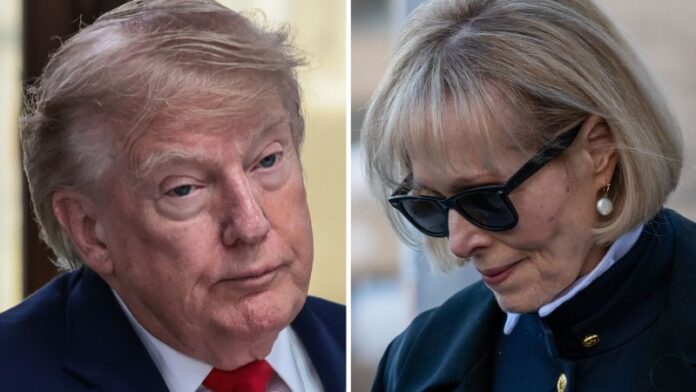
The U.S. Supreme Court on June 29 declined to hear President Donald Trump’s appeal of a 2023 jury verdict finding he sexually abused writer E. Jean Carroll in the mid-1990s and defamed her by publicly denying the allegations. The justices’ decision, issued without any noted dissents, leaves intact a $5 million judgment a Manhattan jury awarded Carroll after finding Trump liable for sexual battery, though not rape, along with a related defamation claim tied to his subsequent denials of her account.
Carroll first came forward publicly with her allegations in 2019, claiming Trump assaulted her in a dressing room at Bergdorf Goodman, a Manhattan department store, in the spring of 1996. She sued him twice in New York, first in 2019 and again in 2022 after the state passed a law temporarily allowing sexual abuse survivors to file civil claims for past incidents regardless of the statute of limitations. The 2022 case went to trial first, resulting in the $5 million verdict now at issue, while the earlier 2019 case produced a separate $83.3 million defamation judgment in January 2024 after a jury determined damages for additional defamatory statements Trump made about Carroll while in office.
Following the Supreme Court’s refusal to hear his appeal, Carroll’s attorneys filed papers in Manhattan federal court asking the judge to order immediate release of the funds, which have grown to nearly $5.8 million with accrued interest. The filing accused Trump of continuing to seek delays even after exhausting his appellate options, noting that his legal team contacted Carroll’s attorneys shortly after the Supreme Court’s ruling to request the payment be postponed while Trump’s lawyers considered asking the justices to reconsider their decision. Carroll’s attorneys, including Roberta Kaplan, rejected that request, stating in their filing that “to date, Carroll has agreed to each of Defendant’s many requests to delay the payment he owes her… that cooperation ends today.”
U.S. District Judge Lewis Kaplan, who is unrelated to Carroll’s attorney, agreed to expedite proceedings, ordering Trump to respond to Carroll’s request by July 7 and giving her legal team three additional days to reply. Legal analysts suggest Carroll could potentially receive the funds as soon as mid-July depending on how quickly the court rules. Trump transferred $5.5 million into a court-controlled account following the original 2023 verdict, meaning the funds are already largely secured and could be released relatively quickly once the court issues its order. Trump has continued to deny the allegations publicly, writing on Truth Social that he would “continue the fight against this Weaponization and Lawfare Case,” and calling the litigation a continuation of what he described as politically motivated attacks against him.
Why It Matters
The resolution of the $5 million verdict represents a significant legal milestone in one of the highest-profile personal litigation matters Trump has faced, closing off years of appeals in a case that has run parallel to his return to the presidency. With the Supreme Court’s refusal to intervene, the verdict now stands as a final, unappealable judicial finding regarding the underlying conduct at issue, a legal reality that carries implications beyond the financial payment itself.
The case also highlights the unusual dynamic of a sitting president continuing to litigate personal civil matters while simultaneously carrying out the full duties of the presidency. Trump’s legal team has previously argued that the ongoing litigation improperly diverts presidential focus and resources, a argument that has found little traction in the courts but continues to feature prominently in the administration’s public messaging around the case.
For Carroll and her legal team, the case represents a broader vindication after years of public denials and repeated legal challenges from Trump’s side. The outcome may also influence how future civil litigation against sitting or former presidents is handled procedurally, particularly regarding the balance between expedited enforcement of judgments and a defendant’s right to pursue further appellate options.
Economic and Global Context
While the $5.8 million payment represents a relatively modest sum compared to Trump’s reported net worth of approximately $6 billion, the case’s outcome carries significance beyond its financial scale. The separate $83.3 million defamation judgment remains under appeal and on hold, meaning Trump’s total potential liability across both Carroll cases exceeds $100 million when combined with accrued interest, a substantial sum even relative to his broader personal finances.
The litigation has unfolded against a backdrop of numerous other legal matters involving the president, creating a pattern that has drawn continued media and public attention throughout his second term. Legal observers note that the resolution of the smaller judgment may set procedural precedent for how the larger, pending appeal proceeds through the court system in the coming months.
Trump’s public response, characterizing the litigation as a “witch hunt” and “lawfare,” reflects a consistent messaging strategy his administration has applied across multiple ongoing legal disputes, framing civil and criminal litigation as politically motivated rather than addressing the underlying substance of the court findings.
Implications
In the near term, the immediate question is whether Judge Kaplan orders the funds released promptly or grants Trump additional time to pursue reconsideration at the Supreme Court, a request that has not yet been formally filed. Given the unanimous nature of the high court’s decision not to hear the case, legal experts view the odds of a successful reconsideration request as extremely low, suggesting Carroll is likely to receive her payment within weeks.
The larger $83.3 million judgment remains the more consequential open legal question, with Trump’s legal team having signaled intent to seek Supreme Court review of that separate verdict as well. How that case proceeds will likely shape the broader narrative around Trump’s personal legal exposure for the remainder of his term.
For Carroll, securing payment on the smaller judgment marks a significant milestone after years of litigation, though her attorneys have not ruled out further legal action depending on Trump’s continued public statements about the case, which could potentially expose him to additional defamation claims going forward.
Sources
“E. Jean Carroll calls for Trump to pay her $5.8M after Supreme Court rejects his appeal”

