Story Highlights
- Trump disclosed he had planned “a very major attack” on Iran scheduled for Tuesday, May 19
- Gulf allies — including Qatar, Saudi Arabia, and the UAE — personally requested a short delay of two to three days
- Oil prices briefly dropped more than $2 per barrel on news of the pause before stabilizing around $107.25
What Happened
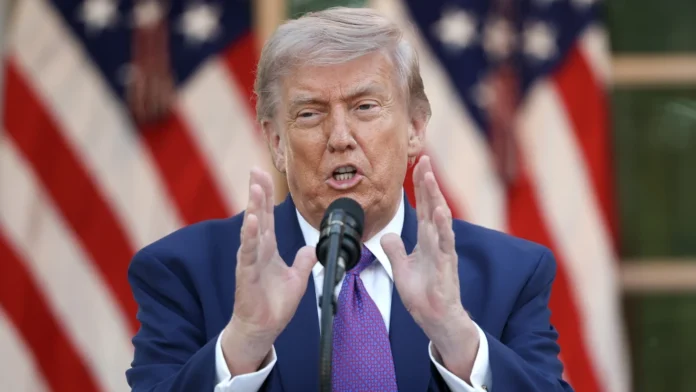
President Donald Trump announced late Monday evening that he had ordered U.S. military forces to stand down from a planned strike on Iran, citing ongoing diplomatic talks and direct requests from key Gulf allies. In a lengthy Truth Social post, Trump revealed that the Emir of Qatar, Saudi Crown Prince Mohammed bin Salman, and UAE President Mohammed bin Zayed all asked him to hold off for a brief period because they believed a diplomatic agreement was close.
“I was asked by Saudi Arabia, Qatar, UAE and some others if we could put it off for two or three days, a short period of time, because they think they are getting very close to making a deal,” Trump told reporters at the White House. He added that he had instructed Secretary of Defense Pete Hegseth and Joint Chiefs Chairman General Daniel Caine to keep U.S. forces ready to launch a full-scale assault on a moment’s notice if talks collapse.
The conflict between the United States and Iran began on February 28, when American and Israeli forces launched coordinated strikes on Iranian missile sites, drone facilities, and IRGC command centers following a series of Iranian provocations in Iraq and Syria. A limited ceasefire took effect in early April but has since held only partially, with naval clashes and militia activity continuing throughout the region.
Iran’s state television, in its initial response, characterized Trump’s announcement as a “retreat” driven by fear. A senior Iranian source told Reuters that the latest proposal from Tehran closely resembled an earlier offer Trump reportedly dismissed last week. Qatar’s Foreign Ministry spokesperson, Majed al-Ansari, said negotiations simply needed more time.
Despite the diplomatic pause, Trump made clear that his patience has limits. He stated that any acceptable agreement must include Iran abandoning its pursuit of nuclear weapons, a demand Tehran has not yet formally accepted. The president also noted he had recently spoken with both Israeli Prime Minister Benjamin Netanyahu and Chinese President Xi Jinping about the standoff.
Why It Matters
The decision to delay a military strike of this magnitude is a significant moment in a conflict that has reshaped Middle Eastern geopolitics and put substantial strain on the global energy supply. Since hostilities began in late February, at least 13 U.S. service members have been killed, and oil prices have remained well above $100 per barrel, directly affecting American consumers at the gas pump.
Trump’s willingness to pause at the request of Gulf allies demonstrates that the administration is actively weighing military pressure against the diplomatic value of maintaining close ties with moderate Arab states. Qatar in particular has historically played an indispensable role as a communications back-channel with adversarial parties, including Iran, and its involvement signals that the talks may carry more substance than previous rounds.
The stakes for the U.S. economy are considerable. The Strait of Hormuz, through which roughly 20 percent of global oil supply passes, has remained effectively restricted since the conflict began. Any resumption of full hostilities would almost certainly push oil prices higher, adding to inflationary pressures that Republicans are already working to manage ahead of the November midterms.
For the Republican Party, the Iran situation presents both an opportunity and a risk. A successful diplomatic resolution before the midterms would give Trump a major foreign policy victory and the ability to claim he ended both a conflict and an energy price surge. A failed negotiation followed by resumed strikes could entrench the political cost of elevated fuel prices and casualty reports.
Economic and Global Context
Oil markets reacted swiftly to Trump’s announcement. Petroleum futures, which had been trading near $108.83 a barrel in the minutes before his post, shed more than $2 almost instantly before settling at $107.25 at Monday’s close. Analysts noted that the partial recovery in prices reflected ongoing market skepticism about whether a durable deal is achievable, given the failure of multiple prior negotiating rounds.
The broader economic impact of the Iran conflict has been significant. Elevated fuel costs have contributed to a renewed spike in transportation and shipping expenses across the U.S. supply chain, compounding challenges for businesses already navigating the administration’s broader tariff regime. The Federal Reserve has been monitoring energy-driven inflation closely, and a resolution of the Hormuz standoff would relieve some pressure on monetary policymakers.
Internationally, China and Turkey have emerged as important interlocutors. Turkish officials indicated Iran is not opposed in principle to nuclear compliance but is focused on the sequencing and conditions of any agreement. China, which purchases substantial quantities of Iranian oil, has an economic interest in a resolution that reopens Persian Gulf shipping lanes without triggering further sanctions.
Iran’s recent establishment of the Persian Gulf Strait Authority — a new body claiming formal governance over the Strait of Hormuz — represents an escalatory signal that analysts say complicates any near-term settlement. The move is widely interpreted as Tehran’s attempt to extract maximum concessions before committing to a ceasefire expansion.
Implications
The next 48 to 72 hours are likely to be decisive. If Gulf intermediaries succeed in bridging the gap between Washington and Tehran on nuclear terms, Trump could emerge from the crisis with a major diplomatic trophy and a tangible economic benefit for American families facing high fuel prices. That outcome would significantly strengthen his party’s position going into the November midterm elections.
If talks collapse and the administration proceeds with military action, the administration will face pressure to explain the scope and objectives of any strike. Congressional Republicans in vulnerable districts have already begun to feel constituent pressure over gas prices, and an escalation without a clear endgame would complicate their campaigns considerably.
For Iran, the proposal reportedly on the table includes nuclear concessions that earlier rounds did not secure. Whether the Supreme National Security Council views the current moment — with U.S. military assets positioned and allies urging restraint — as the best available deal remains to be seen.
American allies in Europe and the broader Gulf region will be watching closely. The administration’s handling of the next negotiating window will shape perceptions of U.S. reliability and resolve in both conflict management and alliance diplomacy for years to come.
Sources
“Trump says he’s called off Iran strike at request of Gulf allies”

