Story Highlights
- Trump personally handed acting AG Blanche a stack of articles marked “Treason” in Sharpie, after which the DOJ issued subpoenas to the Wall Street Journal and other outlets
- The subpoenas relate to a Feb. 23 article about Joint Chiefs Chairman Gen. Dan Caine warning Trump about the risks of the Iran war
- Dow Jones, the Journal’s publisher, condemned the subpoenas as “an attack on constitutionally protected newsgathering”
What Happened
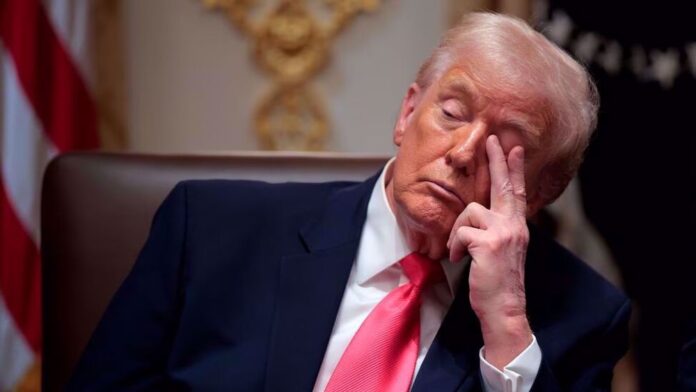
President Donald Trump directed his Justice Department to investigate and subpoena journalists covering the Iran war through an unusually direct form of personal pressure, according to multiple officials familiar with the situation. In a White House meeting, Trump presented acting Attorney General Todd Blanche — his former personal defense attorney — with a stack of printed news articles he and other senior officials believed had damaged national security. On top of the stack was a sticky note with the word “Treason” written in Sharpie. Following that meeting, the Justice Department issued subpoenas to several news organizations, including The Wall Street Journal.
The Journal confirmed Monday evening that it had received grand jury subpoenas dated March 4 for reporters’ records. The subpoenas were connected to a February 23 article that reported on the concerns expressed by Gen. Dan Caine, the chairman of the Joint Chiefs of Staff, and other Pentagon officials about the risks of an extended military campaign against Iran. That article, which also appeared in similar form at Axios and The Washington Post the same day, was published five days before Trump launched the war on February 28. The Journal reported that Blanche subsequently vowed to pursue subpoenas specifically targeting reporters who had worked on sensitive national security stories.
A CNN official confirmed that other news organizations beyond the Journal have also received subpoenas in recent months. Those outlets have chosen not to comment publicly on the matter. One official told CNN that the Justice Department’s National Security Division had already been preparing to examine the sources for some of these stories before Trump’s intervention, but that the president’s direct engagement accelerated the effort significantly. That same official noted that the investigation is nominally aimed at identifying government employees who leaked classified information — not the reporters themselves — though the subpoenas for reporters’ records suggest the line may be less firm in practice.
Acting Attorney General Blanche publicly defended the investigations in a statement on Tuesday, saying the administration had “prioritized prosecuting leakers who share our nation’s secrets with reporters, in turn risking our national security and the lives of our soldiers.” He added: “Any witness, whether a reporter or otherwise, who has information about these criminals should not be surprised if they receive a subpoena about the illegal leaking of classified material.” The DOJ has also coordinated with Pentagon officials in meetings specifically focused on the Iran war leak investigations, according to officials.
Ashok Sinha, chief communications officer of Dow Jones, the Journal’s parent company, responded sharply: “The government’s subpoenas to The Wall Street Journal and our reporters represent an attack on constitutionally protected newsgathering. We will vigorously oppose this effort to stifle and intimidate essential reporting.” Press freedom organizations have echoed that condemnation, describing the subpoenas as one of the most aggressive moves against the news media by any modern administration.
Why It Matters
The targeting of journalists’ records over national security reporting represents a significant escalation in the Trump administration’s campaign against what it characterizes as harmful leaks. Press freedom advocates have long warned that subpoenas for reporters’ records, even when framed as being aimed at sources rather than journalists themselves, have a chilling effect on the ability of the press to report on matters of critical public importance. The question of whether the American public had a right to know that senior military leaders were warning against the Iran war — before that war began — is precisely the kind of information the First Amendment is designed to protect.
The particular story at issue here is not trivial. The February 23 article reported that Gen. Caine and other senior Pentagon officials had warned the president about the risks of an extended military campaign against Iran. The article was published five days before the war began. If accurate, it raised fundamental questions about Trump’s decision to proceed despite explicit warnings from his own military leadership — questions that go to the heart of democratic accountability and civilian control of the military. The administration’s aggressive effort to suppress the sources of that reporting suggests it views the story as politically damaging.
The involvement of Blanche — who served as Trump’s personal defense attorney during his 2024 criminal trials before being appointed acting attorney general — has intensified concerns about the politicization of the Justice Department. Critics argue that Blanche lacks the institutional independence necessary to resist direct presidential pressure in investigations that could benefit Trump politically by deterring coverage he dislikes.
Economic and Global Context
The broader context for this press freedom controversy is a domestic political environment in which the Trump administration has consistently sought to control the narrative around the Iran war. Trump has repeatedly complained about leaked information regarding military operations, including details about the rescue of a downed pilot. In April, he warned that the person who leaked details of that rescue mission would face jail time. The pattern suggests a systematic effort to suppress reporting that might undermine public support for a war that has already proven deeply unpopular.
The Iran war has generated extensive leaked reporting because it involves decisions of enormous consequence — for American lives, American economic wellbeing, and global stability — that were made within a relatively small circle of administration officials. The fact that Gen. Caine and others reportedly warned against the campaign, and that Trump proceeded anyway, is information that voters and policymakers have a legitimate interest in evaluating. Suppressing the sources of such reporting does not change what happened; it only reduces the public’s ability to hold decision-makers accountable.
The legal framework governing DOJ subpoenas to news organizations has evolved significantly over the past decade. During the Obama administration, aggressive leak investigations drew bipartisan condemnation. Under Biden, the DOJ adopted new regulations designed to protect journalists from subpoenas except in the most extreme circumstances. The Trump administration’s apparent reversal of those protections marks a significant policy shift with implications for every major news organization in America.
Implications
If the Journal and other subpoenaed news organizations successfully resist these demands in court — which they have stated they intend to do — the legal battle could stretch for months or years and ultimately reach the Supreme Court. The outcome would have lasting implications for the scope of First Amendment protections in the national security context. Historically, courts have been reluctant to compel reporters to reveal sources, though that protection is not absolute under federal law.
For the broader relationship between the press and the executive branch, the message sent by these subpoenas — reinforced by Trump’s “Treason” labeling of critical articles — is unmistakable. Journalists covering national security matters can expect aggressive investigative responses from this administration when their reporting is deemed harmful. That will inevitably affect which stories are pursued and how carefully sources are protected in future coverage of the Iran war and related matters.
For Republican elected officials, the subpoena controversy poses a political choice. Some conservatives have traditionally championed press freedom as a check on government power. Whether GOP members of Congress choose to weigh in on this matter — or remain silent as an administration they broadly support targets news organizations — will reveal much about the current state of the party’s commitment to constitutional principles.
Sources
“Trump pushed DOJ to subpoena reporters over alleged Iran war leaks, sources say”

