Story Highlights
- Kentucky’s 4th Congressional District primary is set for Tuesday, May 19, pitting Massie against Trump-backed challenger Ed Gallrein
- The race has surpassed $29 million in advertising spending, making it the costliest U.S. House primary on record
- Trump called Massie “the Worst Republican Congressman in History” and urged Kentucky voters to remove him
What Happened
Rep. Thomas Massie, a libertarian-leaning Kentucky Republican first elected in 2012, has long been a friction point for party leadership in Washington. But this election cycle, his relationship with Trump has deteriorated to an open war. Massie voted against key elements of Trump’s legislative agenda, opposed major spending bills, and broke with the president on sensitive issues including access to the Jeffrey Epstein files. Each defection deepened Trump’s fury until the president made defeating Massie a personal mission.
Trump recruited Ed Gallrein, a former Navy SEAL and fifth-generation Kentucky farmer, to challenge Massie directly. The president traveled to Hebron, Kentucky, in March to appear at a campaign event for Gallrein, lending his physical presence and endorsement to the effort. Since then, Trump has unleashed a series of blistering social media posts attacking Massie, calling him a “real loser,” labeling him lazy and disingenuous, and posting Sunday morning that Massie voted against “Tax Cuts, the Border Wall, our Military and Law Enforcement” and should be ousted immediately.
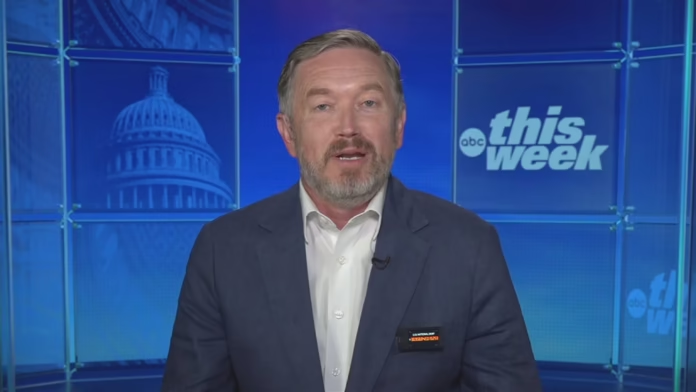
The race drew massive outside spending, with major pro-Israel groups, including AIPAC, funneling significant sums into the effort to unseat Massie. The incumbent struck back on Sunday, appearing on ABC’s “This Week” and accusing out-of-state billionaires of trying to “buy a seat” in Congress by pouring millions into Kentucky. Massie described the primary as a “national referendum,” framing the contest as a question about whether independent voices still have a place within the Republican Party.
The timing of Trump’s pressure intensified after Louisiana Senator Bill Cassidy lost his Republican primary on Saturday, becoming the latest casualty of the president’s campaign to remove intra-party dissenters. Trump immediately turned attention to Massie, amplifying his attacks the same morning, signaling that his appetite for these internal party battles remains undiminished.
Why It Matters
The Massie primary is about far more than one congressional seat in rural Kentucky. It represents the clearest test yet of whether Trump can successfully use primary challenges to impose ideological conformity on Republican officeholders who occasionally diverge from his positions. The implications for GOP governance in Congress are significant, particularly as Trump’s legislative agenda depends on near-unanimous Republican support in the House.
If Gallrein wins, it sends an unmistakable message to every Republican in Congress: cross Trump and face an existential electoral threat. That outcome would almost certainly dampen dissent, making it easier for Trump to push through legislation but potentially reducing the legislative deliberation that has historically prevented costly policy mistakes.
If Massie survives, it demonstrates that incumbency, constituent relationships, and a well-established local brand can resist even the president’s most intense intervention. That result could embolden other Republicans who privately disagree with administration policies to be more openly independent, particularly as the midterms approach and members begin calculating whether complete loyalty to Trump is a winning strategy in their individual districts.
The Massie race also reflects the broader ideological tension within conservatism between traditional libertarian fiscal principles and the economic nationalism Trump championed in both his terms. Massie’s brand of small-government, anti-spending Republicanism has deep roots in the party’s intellectual tradition, and his potential defeat would mark the effective marginalization of that wing.
Economic and Global Context
The financial scale of this primary speaks to how nationalized congressional races have become. Over $29 million in advertising spending for a single House primary primary dwarfs historical norms and illustrates how outside money from organized advocacy groups has transformed the cost of congressional campaigns. AIPAC alone has poured millions into races targeting members it views as insufficiently supportive of U.S.-Israel policy, and Massie’s consistent skepticism of foreign aid made him a prime target.
For Kentucky’s 4th Congressional District, the economic concerns of everyday voters remain centered on agricultural policy, manufacturing, and federal spending. Massie has cultivated a reputation as a fiscal hawk who votes against expansive government expenditures regardless of which party proposes them. His refusal to support Trump’s large-spending bills, including budget legislation that added significantly to the national debt, earned him praise from fiscal conservatives nationally while enraging the White House.
The race has also attracted interest from groups concerned about the direction of U.S. foreign policy. Massie’s skepticism of military aid packages and overseas commitments aligns him with a constituency that worries about American overextension globally. That position has become increasingly complicated as the Trump administration has pursued an aggressive military posture in the Middle East and invested heavily in military operations.
Implications
Regardless of the outcome Tuesday, the race has already reshaped the political landscape within the Republican Party. Dozens of House Republicans have watched closely, recognizing that their own primary futures depend in part on how this contest resolves. A Trump victory over Massie is likely to accelerate the consolidation of power around the president’s agenda and reduce the frequency of internal dissent in the House Republican conference.
For Trump, the Kentucky primary is part of a broader midterm strategy of building a House and Senate composed entirely of loyalists. With control of both chambers essential to sustaining his legislative program, the president has made clear he views ideologically unreliable incumbents as a greater threat than the Democrats they would face in November.
Massie, for his part, has shown no signs of capitulating. His defiant tone in final campaign appearances and media interviews suggests he believes Kentucky’s voters ultimately prioritize the constituent services, legislative independence, and institutional experience he has built over eight terms. Tuesday’s results will reveal which judgment was correct.
Sources
“Rep. Thomas Massie confronts the full force of Trump’s wrath in a Republican primary”

