Story Highlights
- Trump called for suspending the 18.4-cent-per-gallon federal gas tax in a CBS News interview on Monday
- Suspending the tax would require congressional approval and would cost over $23 billion annually in highway and transit funding
- Senate Majority Leader John Thune expressed skepticism, saying the real solution is reopening the Strait of Hormuz
What Happened
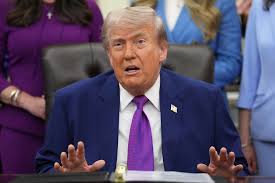
President Donald Trump announced in a CBS News interview on Monday that he intends to suspend the federal gas tax for an indefinite period, describing his plan as a direct response to surging pump prices driven by the ongoing conflict with Iran. “We’re going to take off the gas tax for a period of time, and when gas goes down, we’ll let it phase back in,” Trump said. The federal gas tax currently imposes an 18.4-cent levy per gallon of regular gasoline and 24.4 cents per gallon of diesel fuel.
The announcement was quickly followed by legislative action from a handful of congressional Republicans. Sen. Josh Hawley of Missouri announced on X that he would introduce legislation on Monday to suspend the tax. Rep. Anna Paulina Luna of Florida and Rep. Jeff Van Drew of New Jersey also announced they were introducing companion bills in the House. The speed of those announcements suggested at least some coordination with the White House, though administration officials did not explicitly confirm whether Trump would formally request congressional action.
Energy Secretary Chris Wright signaled the administration’s openness to the idea, telling reporters the White House was “open to all ideas” to lower fuel costs. His comments underscored the urgency felt within the executive branch as gas prices continue to climb. The national average for regular unleaded gasoline stood at approximately $4.52 per gallon as of Monday, according to AAA — a more than 50 percent jump from the $2.98 per gallon average recorded on February 28, the day the U.S.-Israeli military campaign against Iran began.
However, not all Republicans are enthusiastic about the proposal. Senate Majority Leader John Thune of South Dakota told reporters he has not historically been a fan of a federal gas tax holiday and noted significant concerns about the revenue implications. “I’ve not in the past obviously been a fan of that idea,” Thune said, while acknowledging he would “hear out” colleagues who support it. He pointedly noted that the federal gas tax funds the Highway Trust Fund, which finances infrastructure programs across the country, and argued that the better solution is to reopen the Strait of Hormuz.
Democrats have not been entirely opposed to the concept. Sen. Mark Kelly of Arizona and Sen. Richard Blumenthal of Connecticut have previously co-sponsored a bill to suspend the gas tax through October 1. Rep. Chris Pappas of New Hampshire has a companion measure in the House. While Democrats support the consumer relief angle, many have been quick to attribute the high prices to what they characterize as Trump’s “war of choice” with Iran.
Why It Matters
The gas tax suspension proposal reflects the acute political pressure the Trump administration is under as energy prices erode consumer confidence and drag down the president’s approval ratings. A CNN poll conducted from April 30 to May 4 found that only 21 percent of Americans approve of Trump’s handling of gas prices — a historic low. A separate Economist/YouGov poll found that just 25 percent approved of his performance on inflation and prices, with 69 percent disapproving. These numbers carry enormous implications for Republican candidates running in November’s midterm elections.
The highway funding dimension makes this politically complex for Republican lawmakers who have championed infrastructure investment. The federal gas tax generates more than $23 billion per year in revenue for federal highway and public transit programs. Suspending it, even temporarily, would create a funding gap that either necessitates finding alternative revenue sources or accepting reduced infrastructure spending — neither of which is an easy sell politically, particularly in states with aging roads and bridges.
Penn Wharton Budget Model analysis released Monday found that if the federal levy were suspended, gas prices would fall by an average of 13.2 cents per gallon for gasoline and 14.6 cents per gallon for diesel. Those are meaningful but modest reductions. A household filling a 15-gallon tank once a week from June 1 through October 1 would save a total of roughly $35. “The actual benefit to consumers is going to be pretty small,” said Kent Smetters, faculty director at Penn Wharton. There is also the recurring problem that retailers and other supply chain actors have historically pocketed a portion of gas tax holiday savings rather than passing them fully on to consumers.
Economic and Global Context
The push for a gas tax holiday comes as American consumers are feeling the economic pain of the Iran war on multiple fronts simultaneously. Beyond gasoline, diesel prices are approaching all-time highs, with knock-on effects for the cost of food, goods, and services. Shipping and distribution costs have risen sharply. Airlines have raised ticket prices as jet fuel costs have surged more than 85 percent since the start of the conflict. The U.S. Postal Service announced an 8 percent fuel surcharge on certain packages. Farmers are absorbing higher fuel and fertilizer costs during a critical planting season.
Brown University’s Iran War Energy Cost Tracker estimates that American consumers have absorbed a cumulative $37 billion hit from higher gasoline and diesel prices since the war began — equivalent to more than $284 per household. That figure continues to grow each day the Strait of Hormuz remains effectively blocked. Brent crude closed above $114 per barrel earlier in the month, its highest level in 2026, as the conflict shows no sign of imminent resolution.
The broader inflationary picture is also troubling for the administration. The Consumer Price Index rose to 3.3 percent in March, up from 2.4 percent in February before the war. Analysts have predicted that the conflict will add more than one percentage point to U.S. inflation over the coming year. A household spending $5,000 per month could expect to pay approximately $1,800 more annually due to war-driven inflation, according to estimates reviewed by congressional Democrats.
Implications
The fate of the gas tax suspension proposal will hinge largely on whether Republican congressional leaders conclude that the political benefit of passing visible consumer relief legislation outweighs the fiscal and procedural complications involved. With Senate Republicans already engaged in a complex reconciliation process to fund immigration enforcement, adding a gas tax fight to the legislative calendar would stretch bandwidth at a critical moment. Thune’s lukewarm response suggests that leadership will not prioritize the measure unless Trump applies sustained public pressure.
If the proposal does advance, the administrative challenge of ensuring that savings are passed on to consumers — rather than absorbed by retailers and oil companies — will need to be addressed. Past gas tax holidays at the state level have produced mixed results on consumer savings, suggesting that the symbolic value of the action may exceed its practical impact on household budgets.
For Trump and Republicans, the deeper problem is that no temporary tax measure can fully offset the economic damage caused by a Strait of Hormuz blockade that has been in place for more than two months. The only lasting solution, as Thune himself acknowledged, is an end to the Iran conflict and a restoration of normal shipping through the strait. Until that occurs, American consumers will continue to pay elevated prices at the pump regardless of what Congress does with the gas tax.

