Story Highlights
- The Senate passed the $70 billion bill 52–47 on Friday, with no Democratic support and one Republican, Senator Lisa Murkowski, voting against it
- A controversial $1.8 billion “anti-weaponization” fund that nearly derailed the bill was dropped by the Trump administration before the vote
- The House vote is scheduled for approximately 4:30 p.m. Tuesday
What Happened
The House is set to vote Tuesday on Republicans’ $70 billion bill funding immigration enforcement agencies through the rest of President Trump’s term after the Senate approved it early Friday following weeks of roadblocks. Barring any last-minute hiccups among House Republicans, passage would bring an end to the months-long stalemate over funding for Immigration and Customs Enforcement and Border Patrol. The House is scheduled to vote on the legislation around 4:30 p.m. CBS News
House Speaker Mike Johnson, a Louisiana Republican, said Monday that he expected the legislation to pass, although he acknowledged that he had a very small margin of error and that attendance during primary season “is a real challenge.” House GOP leaders had initially planned to hold the vote last week but delayed until this week amid scheduling complications. CBS News
The Senate voted 52–47 to approve the legislation, with no support from Democrats and with a provision preserving a $1.8 billion “anti-weaponization” fund that could compensate Trump’s political allies for allegations that the government mistreated them. One Republican, Senator Lisa Murkowski, voted against the bill. The anti-weaponization fund was ultimately dropped by the administration before the final Senate vote, clearing a major obstacle that had threatened to sink the entire package. CNBC
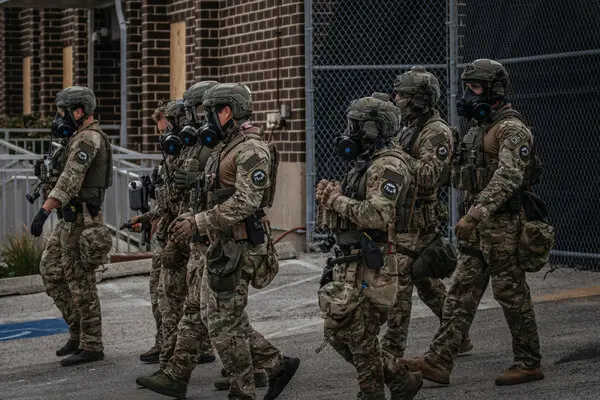
Nearly all of the immigration bill’s funding would go to DHS’s ICE and Border Patrol agencies that are carrying out the Trump administration’s vigorous deportations throughout the United States. The Department of Homeland Security has been operating without full funding since mid-February, when Democrats refused to support any appropriations bill that did not include new constraints on immigration enforcement agencies. CNBC
The funding dispute escalated into a full-blown legislative crisis after two U.S. citizens were fatally shot by immigration enforcement agents in Minneapolis, prompting Democrats to demand that ICE and Border Patrol be subject to the same operational rules as local police departments. Republicans rejected those conditions and instead pursued the reconciliation process, which allowed them to pass the measure with a simple Senate majority rather than the 60 votes typically required.
Why It Matters
The passage of this bill, if it clears the House as expected, would represent one of the most significant immigration enforcement victories of Trump’s second term. A $70 billion infusion for ICE and Border Patrol would dramatically expand the agencies’ capacity to conduct deportations, detentions, and border enforcement operations for the next several years. For Republicans who campaigned on border security, the bill is a central promise fulfilled.
The months-long funding gap has not stopped ICE operations, but it has created operational strain and legal uncertainties. Agency officials have had to manage deployments, personnel, and detention capacity under continuing resolution authorities that provide limited flexibility. A full, multi-year funding package would allow the agencies to plan, hire, and invest in infrastructure on a more stable footing.
The bill’s passage also marks a significant defeat for congressional Democrats, who used every procedural tool available to block or delay the measure. Their core demands — accountability provisions, body camera requirements, and prohibitions on detaining U.S. citizens — were rejected entirely. The outcome is likely to animate the Democratic base heading into the 2026 midterms but also gives Republicans a concrete record to run on.
The handling of the $1.8 billion anti-weaponization fund became a case study in the limits of presidential overreach even within a unified Republican government. The Trump administration’s plans to scrap the controversial $1.8 billion legal fund for victims of alleged government “weaponization” ran into skepticism from Republican senators who demanded public assurances the fund was dead before agreeing to proceed. That episode revealed genuine fault lines within the Republican conference on the question of self-dealing with taxpayer funds.
Economic and Global Context
At $70 billion, the immigration enforcement package represents one of the largest single investments in domestic law enforcement in American history. The funds will flow primarily to personnel, technology, detention facilities, and transportation infrastructure across ICE and Customs and Border Protection. Economists and immigration analysts are divided on the downstream economic effects.
Proponents argue that robust enforcement stabilizes labor markets, protects American wages, and reduces the fiscal burden of illegal immigration on state and local governments. Critics contend that aggressive deportation campaigns disrupt agricultural, construction, and hospitality industries that rely heavily on immigrant labor, with potential ripple effects on food prices, housing costs, and service sector availability.
The bill’s passage also has fiscal implications. Republicans used the budget reconciliation process, which is designed for deficit-neutral or deficit-reducing legislation, raising questions among some fiscal conservatives about how the $70 billion will ultimately be offset. Senate Majority Leader John Thune and other Republican leaders have maintained that the investment in enforcement will pay dividends in reduced long-term costs associated with illegal immigration, though independent budget analysts remain skeptical of that framing.
Implications
With the House vote expected Tuesday afternoon, the bill could reach President Trump’s desk within days. The president has made immigration enforcement the cornerstone of his second-term domestic agenda, and signing this legislation into law would mark a major milestone. Trump had originally demanded Congress send him a bill by June 1 — a deadline that slipped — but the outcome still aligns broadly with his administration’s legislative priorities.
For ICE and Border Patrol, the immediate practical effect would be relief from the budgetary constraints imposed by the funding lapse. The agencies would be able to accelerate deportation operations, expand detention capacity, and hire additional personnel. Administration officials have indicated they intend to use the new resources to intensify enforcement in sanctuary cities and expand interior enforcement operations beyond the border regions.
For Democrats, the vote crystallizes the stakes of the 2026 midterm elections. Control of the House and Senate would give them the power to impose the oversight mechanisms they sought throughout this battle. Democratic messaging will likely center on the lack of accountability provisions and the deaths in Minneapolis as evidence of why oversight is necessary.
Sources

