Story Highlights
- Trump canceled scheduled military strikes on Iran on June 11, citing near-finalized peace negotiations
- Pakistan’s Prime Minister Shehbaz Sharif said the final text of a peace deal had been agreed upon
- Wall Street futures rose and oil prices fell more than 3% following Trump’s announcement
What Happened
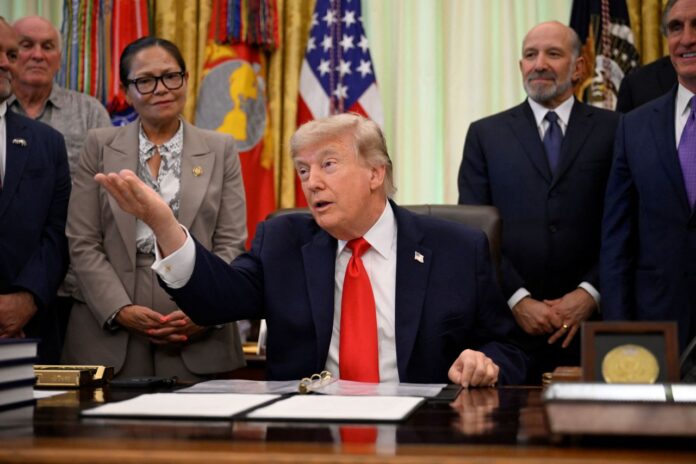
President Donald Trump announced on Thursday, June 11, that he had called off planned military strikes against Iran, stating that the two nations had made what he described as “a great settlement of the war.” The announcement came after weeks of escalating rhetoric, including threats to strike Iranian power plants, energy infrastructure, and strategic military targets. Trump posted the declaration on Truth Social, framing the canceled strikes as a reflection of successful diplomacy rather than retreat.
Pakistani Prime Minister Shehbaz Sharif, serving as one of the key mediators alongside Qatar, announced Friday that a “final, agreed upon text” of a peace deal between the United States and Iran had been reached, with “next steps” to be finalized. Iran’s Foreign Minister Abbas Araghchi offered a more cautious statement, saying the proposed Memorandum of Understanding — referred to in diplomatic circles as the Islamabad MoU — had “never been closer,” while urging media to refrain from speculating about its specific contents.
Iranian Foreign Ministry spokesperson Esmaeil Baghaei confirmed that the text had been “almost finalized in its major parts,” though Tehran stopped short of declaring full approval. Trump, responding to Iranian media characterizations of the agreement, insisted on Truth Social that those portrayals had “NOTHING to do with the terms that were agreed to, in writing.” The divergence in messaging between Washington and Tehran underscored the fragile nature of the moment.
The war itself had escalated dramatically in February 2026, when the United States joined Israel in launching major strikes on Iran. Early strikes eliminated several of Iran’s top military and political leaders. Tehran retaliated by targeting U.S. allies in the Gulf region and restricting maritime traffic through the Strait of Hormuz, triggering significant global energy price shocks. A ceasefire had technically been in place since April, but both sides have continued exchanging fire during a difficult peace process.
Trump’s announcement Thursday was not the first time he reversed course on Iranian military action. Throughout the spring, he repeatedly set deadlines, threatened devastating strikes, and then pulled back as negotiations progressed. Critics argued the pattern reflected diplomatic confusion; supporters maintained it represented calculated pressure that brought Tehran to the table.
Why It Matters
The potential peace deal with Iran would represent one of the most significant foreign policy achievements of Trump’s second term — and one of the most consequential diplomatic developments in the Middle East in decades. Iran’s nuclear program, its support for regional proxy forces, and its control over the Strait of Hormuz have been central flashpoints in U.S. foreign policy for more than twenty years. A durable settlement could reshape the entire regional security architecture.
For American voters, the conflict has carried very real economic consequences. The Strait of Hormuz, through which a significant portion of the world’s oil supply flows, was effectively throttled by Iranian actions earlier in the conflict. Gas prices spiked at the pump, and electricity costs climbed in tandem. Trump’s approval ratings hit a low point amid those pressures, making a peace announcement politically essential as well as strategically important.
The involvement of Pakistan and Qatar as mediators reflects a broader diplomatic reality: the United States and Iran have no direct diplomatic relations, and backchannel arrangements have been essential throughout. The Islamabad MoU framework appears to be the vehicle for formalizing those informal understandings, though the precise terms — particularly regarding Iran’s enriched uranium stockpile — remain undisclosed.
Congressional Republicans have broadly supported Trump’s Iran policy, while Democrats have raised procedural and constitutional concerns about executive war powers. A formal peace agreement, if signed, would likely reignite that debate over congressional authority and the terms under which any U.S. military commitments in the region would be lifted.
Economic and Global Context
Markets reacted immediately and positively to Trump’s announcement. Futures for the S&P 500 rose approximately 0.6% ahead of Friday’s opening bell, while Dow Jones Industrial Average futures gained 0.7% and Nasdaq futures climbed 0.5%. Oil prices sank more than 3%, a significant single-session drop reflecting investor optimism that a resolution to the Strait of Hormuz crisis could restore normal global energy flows.
The Strait of Hormuz carries roughly 20% of global oil and liquefied natural gas shipments. Iranian restrictions on maritime traffic through the strait during the conflict contributed to the largest annual increase in consumer prices since November 2022, according to the Bureau of Labor Statistics. Persistently elevated energy costs have been among the most damaging economic effects of the U.S.-Iran conflict for ordinary Americans.
Internationally, Gulf Arab states closely allied with the United States — including Saudi Arabia and the UAE — had been caught in the crossfire of Iranian retaliatory strikes earlier in the conflict. A formal end to hostilities would allow those governments to normalize their own economic relationships with Tehran, potentially stabilizing a region that has been on edge since February. Israel’s role in any final settlement remains a significant open question.
Global shipping companies have been monitoring the Strait of Hormuz situation closely, with insurance premiums for vessels transiting the waterway reaching historic highs during the peak of the conflict. A signed agreement lifting the U.S. naval blockade on Iran, which Trump has suggested is part of the Islamabad MoU framework, could bring those premiums down rapidly and restore confidence in regional supply chains.
Implications
If finalized and signed, the Islamabad MoU would represent a major test of diplomatic durability. Previous ceasefire arrangements between the U.S.-Israel coalition and Iran collapsed within months, suggesting that any agreement will require robust verification mechanisms. The absence of disclosed terms has made independent assessment difficult, and questions remain about whether Iran’s nuclear program would be verifiably constrained under the deal.
For Trump politically, a signed peace deal before the 2026 midterm elections would be a significant asset. Republicans enter the midterms with a challenging environment shaped in part by inflation and wartime economic disruptions. A visible diplomatic win — ending a conflict Trump himself escalated — could shift the domestic political narrative heading into the fall campaign season.
For Iran, a deal would offer the prospect of sanctions relief and the reopening of its economy to international trade. Iran’s internal economic situation has been severely stressed by years of sanctions and the direct costs of the conflict. The new Supreme Leader, Mojtaba Khamenei, has far less consolidated authority than his predecessor, making internal consensus-building around any agreement a complex domestic challenge for Tehran.
The next seventy-two hours are expected to be decisive. Trump has suggested he hopes to sign the agreement by the weekend, while Iranian officials have urged patience and cautioned against premature celebration. Whether the Islamabad MoU crosses the finish line or collapses into another cycle of threats and negotiations will define the next chapter of this conflict.
Sources

