Consumer prices fell 0.4 percent in June, the sharpest one-month decline since the early days of the pandemic, giving President Donald Trump a striking economic data point to tout just as his administration navigates renewed conflict with Iran and a heavy legislative calendar. The Bureau of Labor Statistics report, released July 14, showed annual inflation cooling to 3.5 percent, beating economist forecasts and sending stocks higher. Trump highlighted the figures prominently during his Thursday primetime address, framing them as proof his economic agenda is working even as some analysts caution the drop may be temporary.
Story Highlights
- The Consumer Price Index fell 0.4 percent in June, the largest monthly decline since April 2020
- Annual inflation slowed to 3.5 percent, below the 3.8 percent economists expected and down from 4.2 percent in May
- The decline was driven largely by a 5.7 percent monthly drop in energy prices tied to a mid-June Iran ceasefire
- Core inflation, excluding food and energy, held flat at 2.6 percent annually, its lowest reading in months
What Happened
The Bureau of Labor Statistics reported Tuesday that the Consumer Price Index fell a seasonally adjusted 0.4 percent in June, marking the steepest single-month decline in prices since April 2020 and defying economist expectations of a modest 0.1 to 0.2 percent drop. On an annual basis, inflation slowed to 3.5 percent, down sharply from 4.2 percent in May and well below the 3.8 percent consensus forecast among economists surveyed by Dow Jones and LSEG. The reading represented one of the more significant economic surprises of Trump’s second term.
The primary driver of the decline was a sharp pullback in energy costs. The energy index fell 5.7 percent for the month, its largest single-month drop since April 2020, with gasoline prices tumbling 9.7 percent and electricity prices down 1 percent. That relief followed a mid-June ceasefire between the United States and Iran that briefly reopened the Strait of Hormuz, sending global oil prices down roughly 21 percent to around $77 a barrel from levels above $90 earlier in the year. Core inflation, which strips out volatile food and energy costs and is closely watched by the Federal Reserve, remained flat for the month, pulling the annual core rate down to 2.6 percent from 2.9 percent in May.
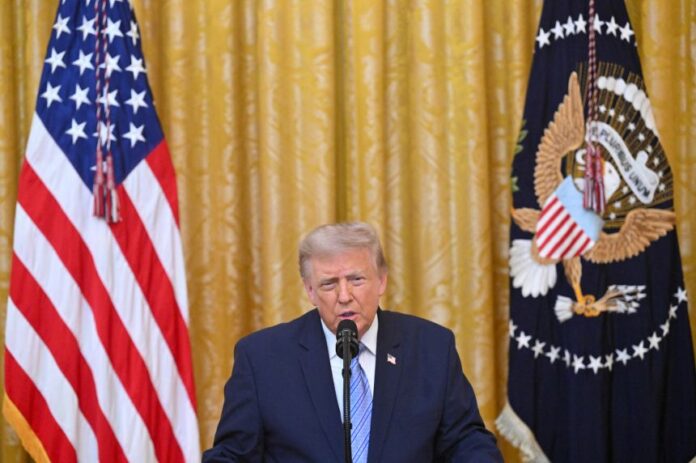
President Trump seized on the figures during his Thursday primetime address to the nation, telling viewers that “inflation saw the largest monthly decline in more than six years” and crediting his administration’s broader economic agenda, including tax provisions in his signature legislation that eliminated taxes on tips, overtime pay, and Social Security income for seniors. Analysts, however, were quick to note the geopolitical roots of the decline. Kiplinger’s markets team described the report as a “classic head-fake,” pointing out that the drop was heavily tied to the temporary reopening of Hormuz rather than a structural shift in underlying inflation trends.
That caveat proved prescient. Even as the report was being celebrated, the ceasefire underlying the energy price relief was already beginning to unravel, with oil prices spiking again in the days that followed as U.S. strikes on Iran resumed. Federal Reserve officials, including newly confirmed Chair Kevin Warsh, had signaled before the report that further rate hikes could be necessary to contain inflation, and market watchers noted the central bank had recently raised its median 2026 inflation forecast to 3.6 percent from 2.7 percent, along with a higher projected path for the federal funds rate.
Markets reacted positively in the immediate aftermath of the report, with the S&P 500 gaining roughly half a percent to close near 7,545 and the Nasdaq climbing more than 1 percent as falling Treasury yields boosted technology stocks. The two-year Treasury yield, which is highly sensitive to near-term Fed policy expectations, fell more than seven basis points, reflecting growing market expectations for potential rate cuts later in 2026.
Why It Matters
For a president who has repeatedly emphasized economic performance as central to his political brand, the June CPI report offered a rare and politically useful data point at a moment when his administration faces scrutiny on multiple fronts, from the resumed Iran conflict to controversy over his election security speech. The White House has consistently pointed to comparisons with the Biden administration’s inflation record, noting that even Trump’s highest monthly CPI reading during his second term remains below the average monthly increases recorded during 24 of the 48 months under his predecessor.
For everyday Americans, the practical impact of a single month’s price decline is more limited than the political messaging suggests. Grocery costs actually rose slightly in June, up 0.2 percent, while shelter costs, which make up the largest share of most household budgets, increased 0.1 percent. The relief was concentrated almost entirely in energy and certain discretionary categories like apparel and used vehicles, meaning many households may not feel a dramatic shift in their overall cost of living despite the encouraging headline number.
For policymakers at the Federal Reserve, the report complicates an already difficult balancing act. A single month of falling prices does not resolve the central bank’s longer-running concerns about elevated inflation, particularly given the volatility introduced by the Iran conflict’s direct effects on energy markets. The Fed’s recent upward revision to its inflation forecast suggests officials remain wary of declaring victory prematurely, even as markets price in a greater likelihood of rate cuts later this year.
Economic and Global Context
The June inflation data cannot be separated from the broader Middle East conflict that has dominated headlines throughout 2026. The initial oil price spike that pushed May’s CPI reading up 0.5 percent was itself a direct consequence of hostilities between the United States and Iran that erupted in February. The subsequent price relief in June reflected the temporary calm secured through the memorandum of understanding signed by both countries in mid-June, underscoring how tightly linked domestic economic indicators have become to geopolitical developments in the Persian Gulf.
That linkage cuts both ways. With the ceasefire now collapsing and U.S. forces conducting sustained strikes on Iranian targets near the Strait of Hormuz, energy analysts widely expect the favorable price dynamics captured in the June report to reverse in coming months. Investment director Ryan Weldon of IFM Investors noted that a prolonged conflict raises the probability that the Federal Reserve will ultimately need to raise rates rather than cut them, directly undercutting the narrative Trump presented in his primetime address.
Globally, the episode illustrates the outsized influence Middle East stability continues to exert on U.S. domestic economic conditions, despite years of efforts to diversify American energy sources. The Strait of Hormuz remains one of the world’s most consequential oil chokepoints, and its status as an active conflict zone introduces a level of unpredictability that complicates forecasting for both American consumers and global markets.
Implications
In the near term, expect the White House to continue emphasizing the June inflation figures as evidence of economic success, even as the underlying energy price relief that drove the report begins to reverse amid renewed hostilities with Iran. Democrats and independent economists are likely to highlight this disconnect, arguing the administration is claiming credit for what was largely a temporary geopolitical reprieve rather than durable policy achievement.
For the Federal Reserve, upcoming inflation reports will be closely watched to determine whether June’s decline was an aberration or the beginning of a genuine cooling trend. Chair Warsh’s public commitments to price stability will face renewed scrutiny if energy prices climb again as the Iran conflict intensifies, potentially forcing the central bank’s hand on interest rate policy well before the midterm elections.
For American consumers and businesses, the practical takeaway is one of continued uncertainty. Categories outside of energy, including housing and groceries, showed only modest relief in the June data, suggesting households should not expect a broad-based reduction in living costs even if headline inflation figures continue to fluctuate favorably in the short term.
Sources

