Story Highlights
- Israel and Iran exchanged missile strikes on June 7 and June 8, the worst military exchange since the April ceasefire
- Trump posted on Truth Social that both sides are “looking to do an immediate CEASEFIRE” and that final peace talks are continuing
- The U.S. naval blockade of Iranian ports remains in full force, with Trump stating it will stay until a permanent peace agreement is reached
What Happened
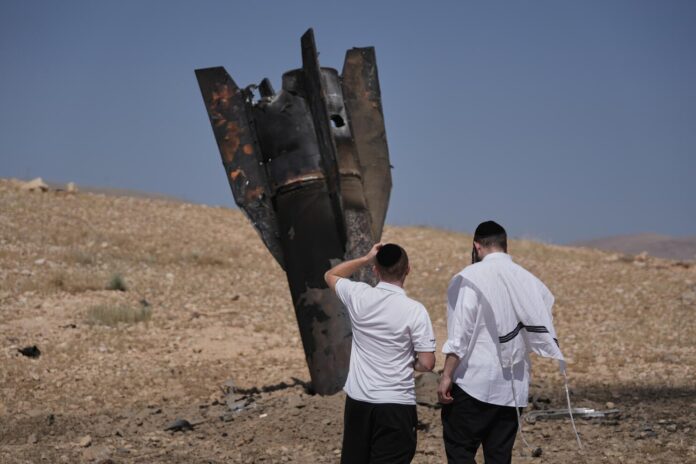
Israel and Iran traded fire on June 8, seriously testing a fragile truce and threatening hopes for a deal to end the Middle East war. U.S. President Donald Trump posted on Truth Social that the two countries were “looking to do an immediate CEASEFIRE” and that “final negotiations” were continuing. The fragile ceasefire between the U.S. and Iran has been in place since early April.
Trump on Sunday told Fox News that the missile attacks are “certainly not going to help negotiations.” In a statement to The New York Times, Iran’s Revolutionary Guard said the ceasefire “was conditional on a cease-fire on all fronts.” “Tonight’s operation was a warning, and if aggressions are repeated, the responses will be broader,” the statement read.
U.S. President Trump said that the U.S. blockade, which was introduced in April, would remain in place “in full force” until a final peace agreement between the two warring nations is reached. Iran will “defeat” the United States’ naval blockade of Iranian ports, a top Iranian negotiator said, while blaming the maritime restrictions in part for the latest military escalation in the region.
Trump said he would be open to meeting with Iran’s new supreme leader if there’s an agreement to end the war. Asked whether such a meeting could take place in the United States, Trump said, “I haven’t really heard too much about it.” Energy Secretary Chris Wright, who was with Trump in the Oval Office, sought to deflect criticism over rising gas prices, saying that Democrats’ green energy policies have driven up prices “far more than a conflict in Iran.”
Why It Matters
The ceasefire that took hold in April represented one of the most significant diplomatic achievements of Trump’s second term, halting what had been an escalating military conflict between American-backed Israeli forces and Iranian military assets. Maintaining that ceasefire while negotiating a permanent resolution has proven far more difficult than administration officials initially projected, particularly given ongoing fighting between Israel and Hezbollah in Lebanon.
Iran’s position is that any potential agreement hinges on the U.S. changing its behavior amid a climate of deep mistrust. A top Iranian negotiator told CNN Senior International Correspondent Frederik Pleitgen, “If we could reach confidence that they are people of negotiation and that they also submit to the rules of negotiation, then the Islamic Republic, because it has the logic of negotiation, would have no problem with negotiating.” The negotiator added that it was Tehran’s belief that Trump is not being truthful amid the negotiations.
The exchange of strikes on June 7 and 8 represents a major setback for the diplomatic track because it reinforces hard-liners on both sides. In Israel, political pressure from nationalist factions to escalate against both Hezbollah and Iranian assets has grown. In Iran, the Revolutionary Guard’s public framing of the strikes as a “warning” signals that its military leadership retains significant influence over the negotiating posture of the civilian government.
For American voters and policymakers, the durability of the ceasefire is directly tied to economic conditions at home. The war has been the primary driver of elevated energy prices since February, and any resumption of full-scale hostilities would almost certainly push oil prices sharply higher again.
Economic and Global Context
When the United States and Israel launched attacks on Iran in late February, analysts hoped that a speedy resolution to the war could mean a quick return to prewar levels of energy production. But more than 100 days later, with no end to the war in sight, Trump and his allies have all but guaranteed high energy prices through the summer and beyond. In the early days of the war, Trump insisted that the situation would be resolved in four to five weeks.
The Trump administration is turning to several options to counter rising oil prices, with Brent crude at about $108 a barrel, a 48 percent surge since the start of the war. Strategies range from tapping the Strategic Petroleum Reserve to easing government regulations that boost the cost of petroleum products.
The Trump administration has released about 58 million barrels of oil — 14 percent of the reserve — from America’s emergency stockpile in a bid to ease the supply crisis caused by the war with Iran since it began. The SPR still has 357.1 million barrels of crude, but that is the smallest amount since January 2024, according to federal data. Analysts have warned that further drawdowns could leave the reserve depleted if a major domestic energy disruption occurs simultaneously.
Implications
If talks collapse entirely and the ceasefire dissolves, the administration faces a difficult set of options: recommit to military action that has already proven costly in diplomatic and economic terms, accept a nuclear-armed Iran, or return to a diplomatic framework that would require significant concessions. None of those paths is without major domestic political costs for Trump.
For global markets, the stakes are equally high. The Strait of Hormuz, which Iran closed at the start of the conflict, carries roughly 20 percent of the world’s daily oil supply. Any return to that closure scenario would send energy prices to levels that could tip multiple national economies into recession.
Republican allies have generally rallied behind Trump’s Iran policy, but with gas prices above four dollars per gallon nationally and the summer driving season underway, the political patience of even supportive constituencies has limits. The next several days of negotiations, and whether both Israel and Iran show genuine willingness to stop the exchange of fire, will be pivotal in determining how the coming weeks unfold.
Sources
“Trump insists negotiations are continuing despite Israel and Iran trading strikes”

